
Chimney Sweep Services in Short Hills, NJ
A chimney sweep is the professional cleaning of your fireplace flue removing creosote buildup, soot, blockages, and debris so combustion gases can vent safely out of your home. It matters because creosote, the tar-like byproduct of wood combustion, is the leading cause of chimney fires in the United States, and even a thin layer can ignite at temperatures above 1,000°F. If you use a wood-burning fireplace or stove in your Short Hills home, a chimney sweep is not optional maintenance it is a basic safety requirement.
Here in Short Hills a community of older Colonial and Tudor-style homes tucked into the Watchung foothills many fireplaces date back decades and see serious use from October through March. Our crews know the local housing stock, the way these older clay-tile flue liners behave after long heating seasons, and the specific problems that Essex County weather patterns create for masonry chimneys year after year.
The Problem Most Homeowners Don’t See Coming
It starts the same way every time: a homeowner lights the first fire of the season, the house fills with an acrid smoky smell, and suddenly the evening they planned falls apart. Sometimes it’s a blockage a bird’s nest, a chunk of deteriorated mortar, a wasp colony that moved in over the summer. Sometimes it’s a heavy coat of glazed creosote that formed because the previous season’s fires smoldered too cool. And sometimes it’s both.
None of this is visible from your living room. The inside of a chimney flue is dark, narrow, and inaccessible without professional equipment and training. That’s exactly why the National Fire Protection Association (NFPA 211) recommends chimneys be inspected and cleaned at least once a year before the heating season begins, not after something goes wrong.
Short Hills Chimney exists to make sure you never have that first-fire-of-the-season story to tell.
What a Professional Chimney Sweep Actually Covers
When our technician arrives at your Short Hills home, the work is methodical and complete. Here is exactly what is included in our standard chimney sweep:
- Full flue brushing — We use rotary or hand-rod chimney brushes sized precisely to your flue dimensions (round, square, or rectangular) to loosen and dislodge all creosote and soot deposits from the smoke chamber down through the firebox.
- Smoke chamber cleaning — The smoke chamber above your damper is one of the most neglected surfaces in any chimney system. We brush and vacuum it thoroughly, not just the visible sections.
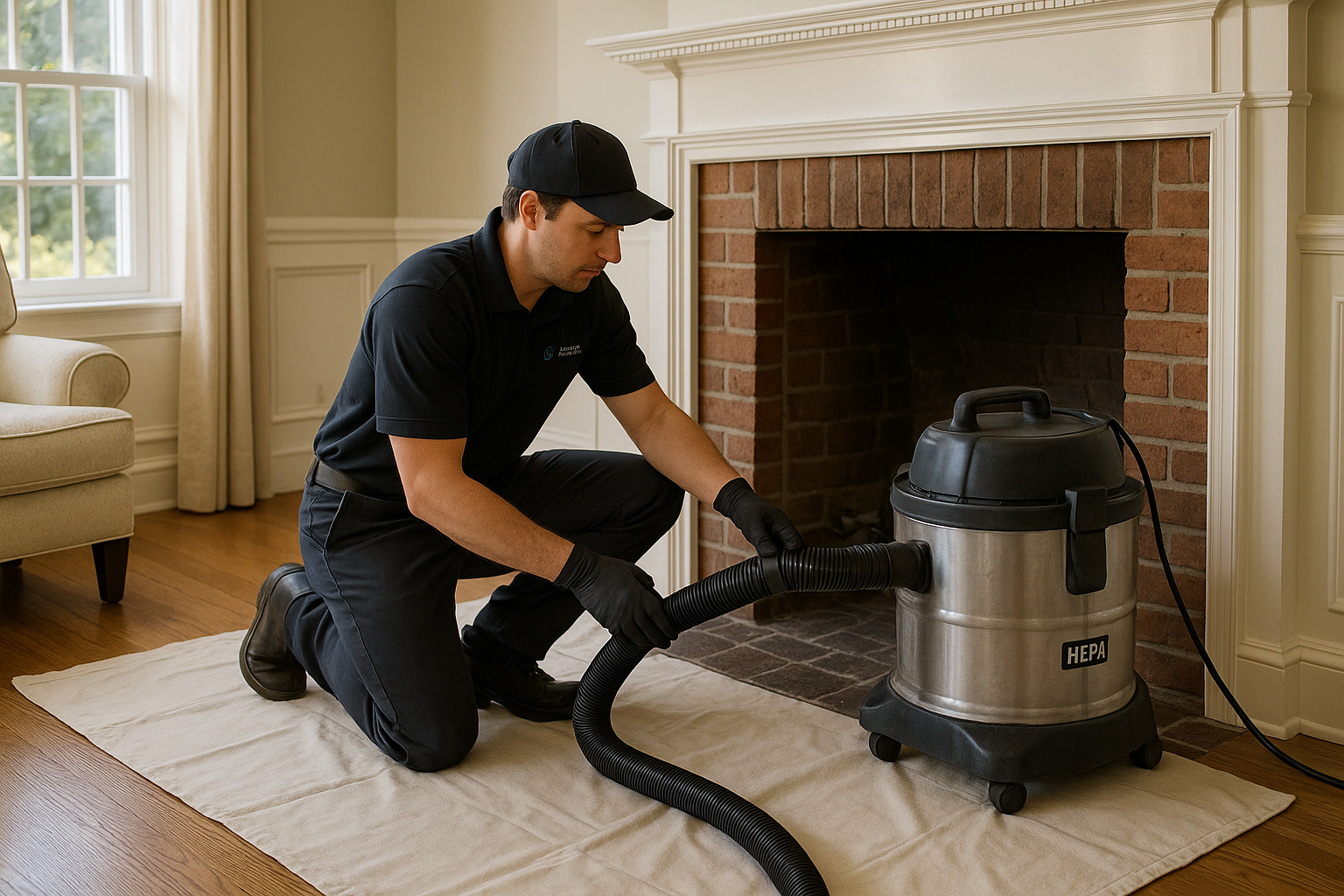
- Firebox vacuuming — Using HEPA-filtered equipment, we capture loosened debris at the firebox opening so nothing escapes into your living space or onto your floors and furniture.
- Damper inspection and operation check — We open and close your damper, confirm it seals properly, and flag any stiffness or damage that could compromise draft control.
- Visual flue inspection — Every sweep includes a visual check of the flue liner condition from below and, where accessible, from the rooftop. Cracks, spalling, and mortar deterioration get noted and explained.
- Cap and crown check — From the rooftop, we inspect your chimney cap for damage or blockage and note the condition of the mortar crown. Both are critical to keeping water and wildlife out of your flue between cleanings.
- Written service summary — You receive a clear written report of what was cleaned, what was found, and what, if anything, needs follow-up. No verbal-only handoffs.
How We Work from Driveway to Done
We show up on time and in a marked vehicle. Before touching anything, the technician lays down drop cloths at the hearth and seals the firebox opening with a work screen or plastic barrier a simple step that eliminates the dust and mess that gives chimney work a bad reputation. All our vacuuming equipment uses HEPA filtration rated to capture fine soot particulates.
Cleaning proceeds from the top of the chimney down, which keeps loosened material moving in the same direction as gravity. After brushing, we vacuum the smoke chamber and firebox floor, remove the drop cloths, and do a final walkthrough with the homeowner. The entire process for a standard single-flue fireplace typically takes 45 to 75 minutes. We do not rush it.
If the inspection portion of the visit reveals a concern a cracked liner tile, a deteriorating mortar crown, a damper that no longer seals we explain it clearly, show you photographs where possible, and provide an honest assessment of urgency. Some repairs need to happen before you light another fire. Others can wait until spring. We will tell you which is which without pressure.
Why Short Hills Homeowners Trust Us With Their Chimneys
Short Hills sits in the Millburn Township portion of Essex County, an area with some of the oldest residential architecture in northern New Jersey. Many of these homes were built between the 1920s and the 1960s, and their chimneys reflect that era clay-tile liners, soft historic mortar joints, and in some cases, multiple flues serving both a fireplace and an oil or gas appliance within the same chimney stack. That configuration requires a technician who understands chimney system design, not just basic cleaning.
Our technicians are trained in NFPA 211 standards and follow Chimney Safety Institute of America (CSIA) best practices for inspection and cleaning procedures. We carry full liability insurance and are familiar with the permit and safety requirements that apply to Essex County residential properties.
We have cleaned chimneys on Hobart Avenue, on Old Short Hills Road, and in the neighborhoods surrounding the Short Hills train station homes that represent a real range of ages, fireplace styles, and flue conditions. That local familiarity matters when a technician is diagnosing why a flue that worked fine last winter is suddenly drafting poorly.
Frequently Asked Questions About Chimney Sweeping in Short Hills
How often does a wood-burning fireplace in Short Hills actually need to be swept?
The NFPA 211 standard says at least once per year, regardless of how often you use the fireplace. In practice, if you burn more than two cords of wood in a season or you regularly burn softwoods, you may develop enough creosote to warrant a mid-season cleaning. Short Hills winters run roughly November through March five months of meaningful use, so an annual pre-season sweep in September or October is the right rhythm for most households here.
My fireplace smells like smoke even when it’s not in use. Does that mean it needs to be swept?
A smoky odor in warm weather is usually caused by creosote deposits in a dirty flue reactivating in summer humidity a very common complaint in older Short Hills homes where the chimney stack sits partially inside the house. A thorough sweep removes the source of the odor. If the smell persists after cleaning, it typically points to a negative air pressure issue or a damaged chimney cap that is letting moisture in, both of which we can diagnose during the same visit.
Is a chimney sweep the same thing as a chimney inspection, and do I need both?
They overlap but are not identical. A sweep is the physical cleaning of the flue. An inspection is a systematic evaluation of the chimney’s structural and safety condition. At Short Hills Chimney, every sweep includes a Level 1 visual inspection as part of the service — we do not clean a chimney without also looking at it. If we find anything that warrants a closer look with a camera or more detailed structural evaluation, we will tell you and can schedule that separately. You should never have a chimney swept by a company that skips the inspection component.
Schedule Your Chimney Sweep Before the Heating Season Begins
The best time to book a chimney sweep in Short Hills is late summer or early fall, before the fireplaces on your street start running and our schedule fills up. If you missed that window, we still want to hear from you a dirty chimney should not be used, and we will work to get you on the schedule as quickly as possible.
Call Short Hills Chimney directly or use our online booking form to request an appointment. Tell us your address, the type of fireplace or stove you have, and roughly when you last had the chimney cleaned. We will take it from there.
Call us today or book online and go into this heating season knowing your chimney is clean, clear, and ready to work safely.
Related from Short Hills Chimney: Trusted Chimney Sweep New Providence NJ · Trusted Chimney Inspection New Providence NJ