
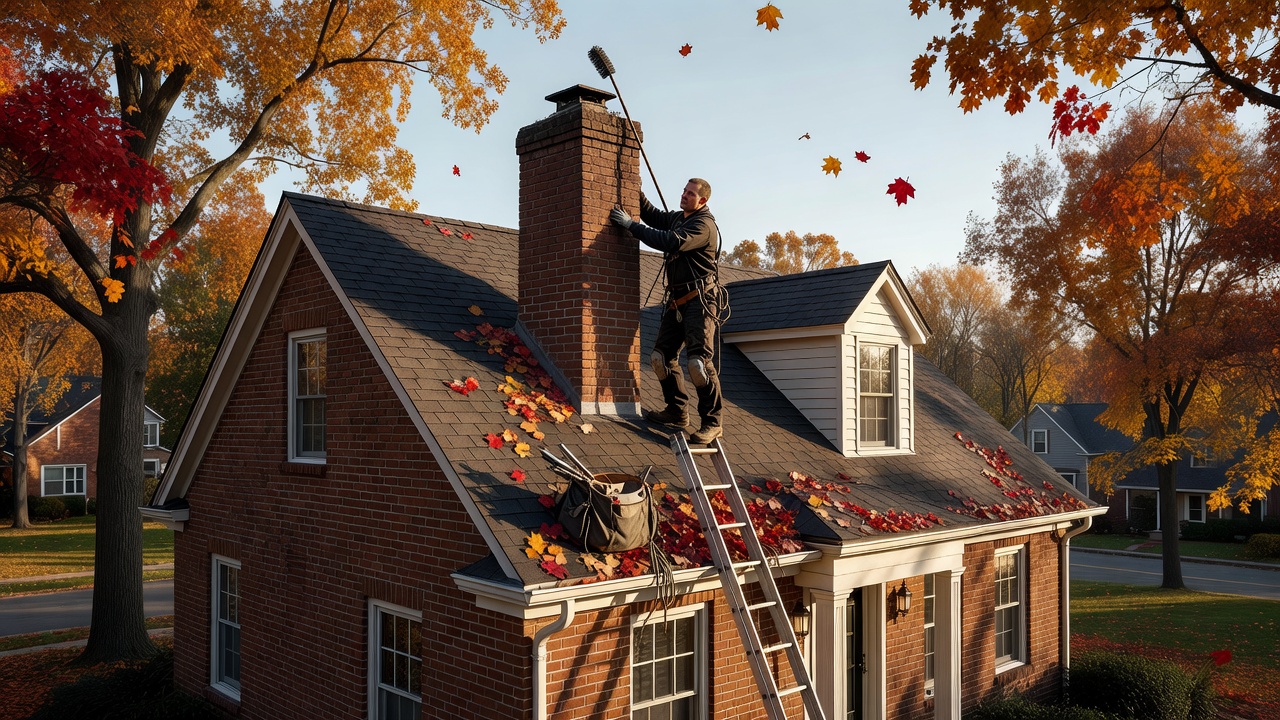
Chimney Cleaning Essex County: Ready Before the First Fire of Fall
Chimney cleaning in Essex County means the professional removal of creosote, soot, blockages, and debris from your flue so that combustion gases vent safely and your fireplace performs the way it should. It matters because a single season of regular woodburning can deposit enough creosote inside a flue to fuel a chimney fire that burnt at over 2,000 °F far beyond what most masonry can withstand. At Short Hills Chimney, we serve homeowners across Essex County from our base right here in Short Hills, and we believe the best time to schedule a cleaning is before you need the fireplace, not after you’ve already lit it a dozen times.
New Jersey’s shoulder seasons that narrow band of cool October evenings before full winter sets in have a way of arriving earlier than people expect. Our schedule fills fast in September and October, so the homeowners who stay warm all season without worry are almost always the ones who called in August.
Why Essex County Homes Build Up Creosote Faster Than You Might Expect
Short Hills and the surrounding Essex County communities sit in a mixed-hardwood belt. Locals commonly burn oak, cherry, and maple excellent firewood in terms of heat output, but only when it has been properly seasoned. Unseasoned or partially seasoned wood produces cooler, wetter smoke that condenses against the flue walls and accelerates creosote layering. Older homes in the Short Hills Historic District and in neighboring Millburn often have taller, narrower flues built to serve coal-era stoves; those proportions create longer dwell-time for smoke, which compounds the problem. Understanding the local housing stock and the wood people actually burn around here shapes how we approach every job.
The National Fire Protection Association’s Standard 211 calls for chimneys to be inspected and cleaned when needed at least once a year. For a household burning four or more cords per season, “when needed” almost always means annually.
What a Short Hills Chimney Cleaning Actually Involves
We do not show up, run a brush through once, and hand you a receipt. A cleaning appointment with Short Hills Chimney follows a consistent process designed to leave your flue genuinely clean and give you accurate information about its condition.
- Visual pre-inspection: Before we touch a brush, we assess the firebox, smoke chamber, damper, and accessible flue sections to identify any conditions that could affect how we clean or that you need to know about independently.
- Drop-cloth and seal setup: We seal the firebox opening with a dust-control barrier and lay protective drop cloths on your hearth and surrounding floor. Your living room stays clean.
- Top-down rotary cleaning: Working from the roof, we use chimney brushes sized precisely to your flue dimensions round, oval, or rectangular combined with rotary drive rods to dislodge creosote and soot from the liner walls. For heavier glazed creosote (third-degree deposits), we use appropriate chemical treatments before mechanical cleaning.
- Vacuum extraction: A HEPA-filtered commercial vacuum runs continuously at the firebox during the cleaning, capturing dislodged material before it can migrate into the room.
- Debris removal and firebox cleanup: All collected material is bagged and removed from the property.
- Post-clean condition report: We document what we found liner condition, damper function, smoke chamber surface, firebox joints and walk you through it before we leave. No guesswork, no upsell pressure; just an honest account of what’s there.
What’s Covered in a Standard Cleaning Appointment
Every chimney cleaning we perform in Essex County includes the full process above at a single flat rate for a standard single-flue system. That means the visual inspection, the cleaning itself, HEPA vacuuming, debris disposal, and the written condition summary are all part of the same visit not itemized add-ons. Homes with multiple flues (a separate flue for a furnace or a second fireplace, for example) are quoted accordingly, and we will tell you upfront before we schedule. If we discover a condition during cleaning that warrants a formal Level II camera inspection, we will explain why and quote it separately; we will never perform work you have not agreed to.
A Few Reasons Essex County Homeowners Keep Calling Us Back
Short Hills Chimney is licensed and insured in New Jersey, and our technicians are certified through the Chimney Safety Institute of America (CSIA). We carry liability coverage that protects your home, not just our crew. We work across Essex County Short Hills, Millburn, Maplewood, South Orange, Livingston, West Orange, and neighboring towns so we know the chimney styles common to each area, from the older brick stacks on Colonial Revival homes to the prefabricated metal-flue systems installed in 1980s and 1990s construction. We do not subcontract jobs out to crews we have not trained. The technician who cleans your chimney is the same kind of person who would clean ours.
We schedule in real time, confirm appointments by text or email (your preference), and arrive in the agreed window. If something comes up on our end, we call you we do not just no-show.
Frequently Asked Questions About Chimney Cleaning in Essex County
How do I know if my chimney needs cleaning now, or if it can wait until next fall?
The clearest signs are a strong smoky or tarry odor in your home when the fireplace is not in use, visible soot or oily residue on the firebox walls, or smoke that backs into the room rather than drafting up cleanly. If you burned more than two cords of wood last season and have not had a cleaning since, the flue should be cleaned regardless of visible symptoms. Creosote accumulation that would concern us does not always produce obvious warning signs until it is already a serious deposit.
My house in Short Hills was built in the 1920s. Does the age of the chimney change how you clean it?
Yes, in a meaningful way. Pre-war chimneys in Short Hills and Millburn were often built without a clay tile liner, or with liners that have since cracked or shifted. Before cleaning, we assess the liner condition carefully in an unlined flue or a flue with significant liner damage, certain mechanical cleaning methods require adjustment to avoid dislodging material that could create gaps or worsen existing cracks. We will tell you exactly what we find and what it means before we proceed.
Can you clean a gas fireplace chimney as well, or is this service only for wood-burning systems?
We clean and inspect both woodburning and gas appliance flues. Gas flues do not accumulate creosote the way wood flues do, but they can collect moisture deposits, spider nests, and debris from the top opening, and the liner condition still matters for safe venting. If your gas fireplace has not been inspected in the last two years, a cleaning appointment which includes that visual assessment is a reasonable step.
Schedule Your Essex County Chimney Cleaning Before the Rush
The window between late summer and early October is the best time to get on the calendar. Once the first cold snap hits, availability across Essex County tightens quickly. Contact Short Hills Chimney today to schedule a cleaning appointment or ask a question about your specific system. We will give you a straight answer and a fair price no pressure, no mystery fees.
Call us or use the contact form on this page to book your chimney cleaning in Essex County. We look forward to keeping your home warm and your flue clean this season.
Related from Short Hills Chimney: Chimney Sweep Services in Short Hills, NJ · Smart Chimney Cleaning Essex County NJ · Chimney Inspection in Short Hills, NJ