
Published November 5, 2026
Chimney Waterproofing Short Hills NJ: What It Costs to Wait Until Spring
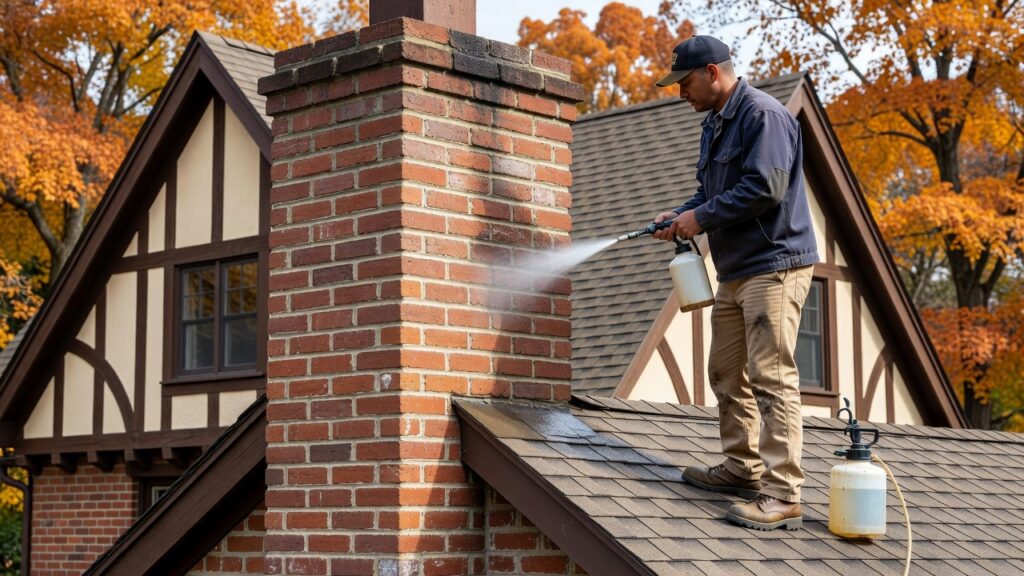
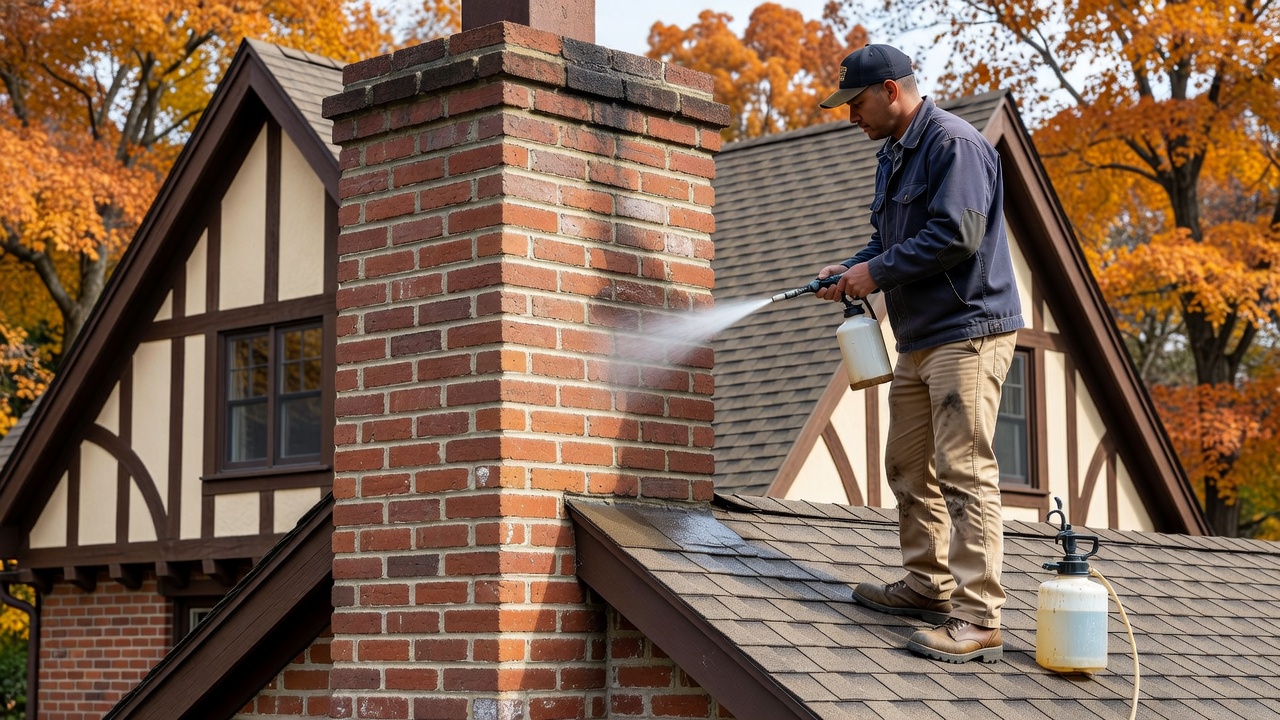
Most homeowners who call us about chimney waterproofing in Short Hills NJ do so after something has already gone wrong. A spalled brick face. A damp smell near the firebox. White staining spreading across the chimney stack above a Tudor-style roofline on Wyoming Avenue. By the time those signs appear, water has usually been working on the masonry for at least one full freeze-thaw cycle, and the repair bill reflects it.
The good news is that waterproofing a chimney is straightforward and affordable when it’s done before damage sets in. The less good news is that a lot of what homeowners believe about the service causes them to delay it, sometimes by years.
Why the “Wait Until Spring” Thinking Costs More Than You’d Expect
A homeowner on Hobart Avenue in Short Hills called us last fall after noticing mortar joints crumbling along the upper third of her chimney. She’d been putting off waterproofing for two seasons because she’d heard it was something to do in warmer months. That’s a reasonable-sounding rule, but it isn’t quite right. Waterproofing sealant does need dry masonry and temperatures above freezing, but that window exists from late spring all the way through early November in most years here in Essex County. Waiting until April or May while wet winters chip away at unprotected brick is not caution; it’s just delay.
According to the National Chimney Sweep Guild, New Jersey’s freeze-thaw climate cycles are among the most damaging to masonry chimneys, causing spalling, cracked crowns, and deteriorating mortar joints that worsen each winter if left unaddressed. Every freeze-thaw cycle forces moisture deeper into the brick. Once water gets behind the face of the masonry, it expands when temperatures drop, pushing the brick apart from the inside. What starts as a surface treatment job becomes a repointing project, and what starts as a repointing project can eventually become a partial rebuild.
The cost difference is real. A professional waterproofing application on a standard two-flue chimney in Short Hills typically runs $300 to $500 depending on chimney height and condition. A repointing job on the same chimney, once mortar joints have deteriorated, can run $800 to $1,500. A partial crown rebuild adds to that. A full chimney rebuild on a Millburn or Maplewood Colonial can exceed $5,000. Waterproofing is not expensive. Skipping it is.
What Homeowners Get Wrong About Chimney Waterproofing
One of the most common things we hear is that painting the chimney is the same as waterproofing it. It is not. Standard exterior paint traps moisture inside the masonry rather than blocking it from the outside. Proper chimney waterproofing uses a vapor-permeable sealer, meaning water vapor from inside the brick can still escape outward, but liquid water cannot penetrate inward. Using the wrong product actually accelerates deterioration by locking moisture in place. We’ve seen this mistake on chimneys in Summit and Chatham, usually done by well-meaning contractors who don’t specialize in masonry.
Another misconception is that a newer chimney doesn’t need waterproofing. Brick and mortar are porous from day one. A chimney installed five years ago has already been through five winters. Unless it was treated at installation, it has never had a moisture barrier. Age makes the problem worse, but it doesn’t create it. Even chimneys on homes built in the 1990s in Livingston or Florham Park benefit from treatment before they reach the point where the brick face is visibly compromised.
Some homeowners assume that if the flashing looks fine, water isn’t getting in. Flashing failure is one pathway for water intrusion, but it’s not the only one. Brick and mortar absorb rainwater directly through their surfaces. A chimney with intact flashing and no cap damage can still take on significant moisture through the masonry itself. The cap and flashing address entry points at the top; waterproofing sealer addresses the entire exterior surface of the stack.
There’s also a belief that waterproofing is cosmetic, something you do because the chimney looks weathered. The function is entirely structural. A properly sealed chimney resists water absorption, which protects the mortar joints, the brick faces, the firebox liner, and the crown. The NFPA Standard 211 recommends that chimneys and fireplaces be inspected at least once a year for soundness and freedom from deposits, and water damage is one of the primary things a qualified inspector is looking for. Cosmetic decline is just the visible stage of a structural problem that began months or years earlier.
Finally, many homeowners think any time of year works as long as it’s not raining. Temperature matters as much as precipitation. Applying sealer in temperatures below 40 degrees Fahrenheit prevents it from curing correctly, which means it won’t bond properly to the masonry. That’s why we schedule waterproofing appointments in Short Hills from late April through mid-October, and why late summer and early fall are actually the best window. The masonry has had a full warm season to dry out, and there’s still enough time before the first hard frost to let the sealer cure fully before winter sets in.
The Right Time to Schedule Is Before You See a Problem
The U.S. Fire Administration reports that heating fires account for approximately 15% of all residential fires, and water-damaged flue liners and deteriorated fireboxes are a contributing factor in that number. A compromised chimney isn’t just a masonry problem; it’s a safety concern. Scheduling chimney waterproofing in Short Hills NJ before damage appears is the simplest way to protect the investment you’ve made in the chimney and the home around it.
If you haven’t had your chimney inspected recently, that’s the natural starting point. Our technicians assess the condition of the crown, mortar joints, brick faces, and flashing before recommending waterproofing, because sealing a chimney that already has active cracks just locks problems in place. The inspection comes first, and waterproofing follows once we know the surface is sound.
Frequently Asked Questions
How long does chimney waterproofing last in Short Hills NJ?
A professionally applied vapor-permeable sealant typically holds for eight to ten years under normal conditions. New Jersey’s wet winters and temperature swings can shorten that window on chimneys with existing minor cracks or rough mortar texture, which is why we inspect the surface before every application. Reapplication every seven to ten years is a reasonable maintenance schedule for most homes in Short Hills and the surrounding Essex County area.
Can chimney waterproofing be done in the fall?
Yes, as long as daytime temperatures are consistently above 40 degrees Fahrenheit and the masonry is dry. In most years, that window extends through mid-October in Short Hills. Early fall is actually a good time because the brick has dried out over summer and there’s enough warm weather ahead for the sealer to cure before the first frost. We stop scheduling applications once temperatures become unreliable, typically by late October.
Does chimney waterproofing affect draft or fireplace performance?
No. The sealant is applied only to the exterior masonry surfaces, not to the flue liner or any internal components. It has no effect on airflow, draft, or how the fireplace burns wood. A properly applied exterior sealant is invisible once dry and does not change the appearance or function of the chimney in any way.
Schedule your chimney inspection and waterproofing with our team before the fall window closes. We serve Short Hills, Millburn, Maplewood, Summit, and surrounding communities in Essex and Union Counties. Contact Short Hills Chimney to set up your appointment and have your chimney inspected before another winter cycle takes its toll on the masonry.
Related from Short Hills Chimney: Chimney Repair in Short Hills, NJ