
Published November 6, 2026
Chimney Repointing in Short Hills NJ: What It Costs and Why Crumbling Mortar Is a Safety Problem
Over 25,000 chimney fires occur in the United States every year, according to the Chimney Safety Institute of America, and deteriorating mortar joints are one of the most common reasons inspectors find chimneys that are unsafe to use. If you have been putting off chimney repointing in Short Hills NJ, the gap between “cosmetic issue” and “structural hazard” is shorter than most homeowners realize.
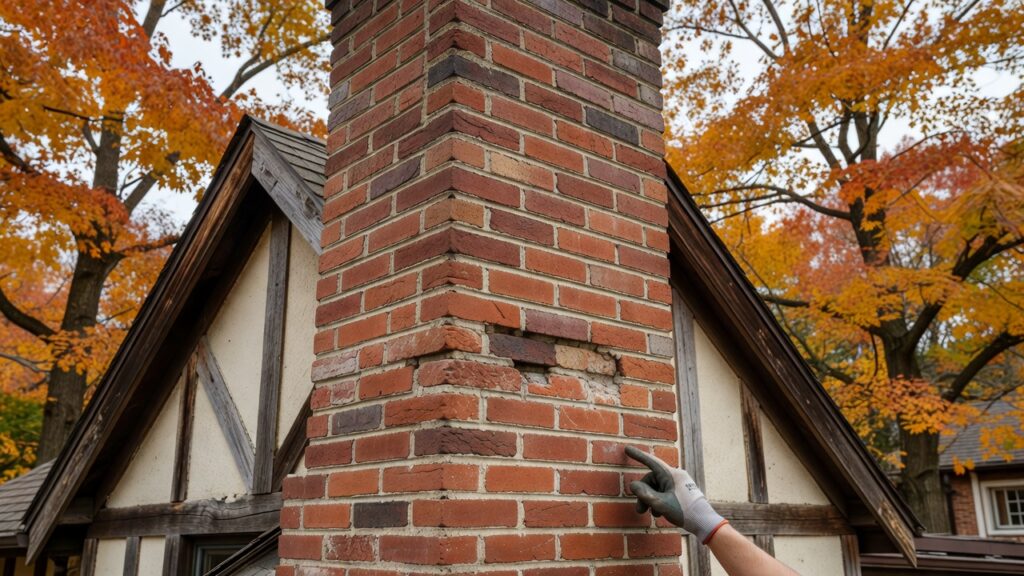
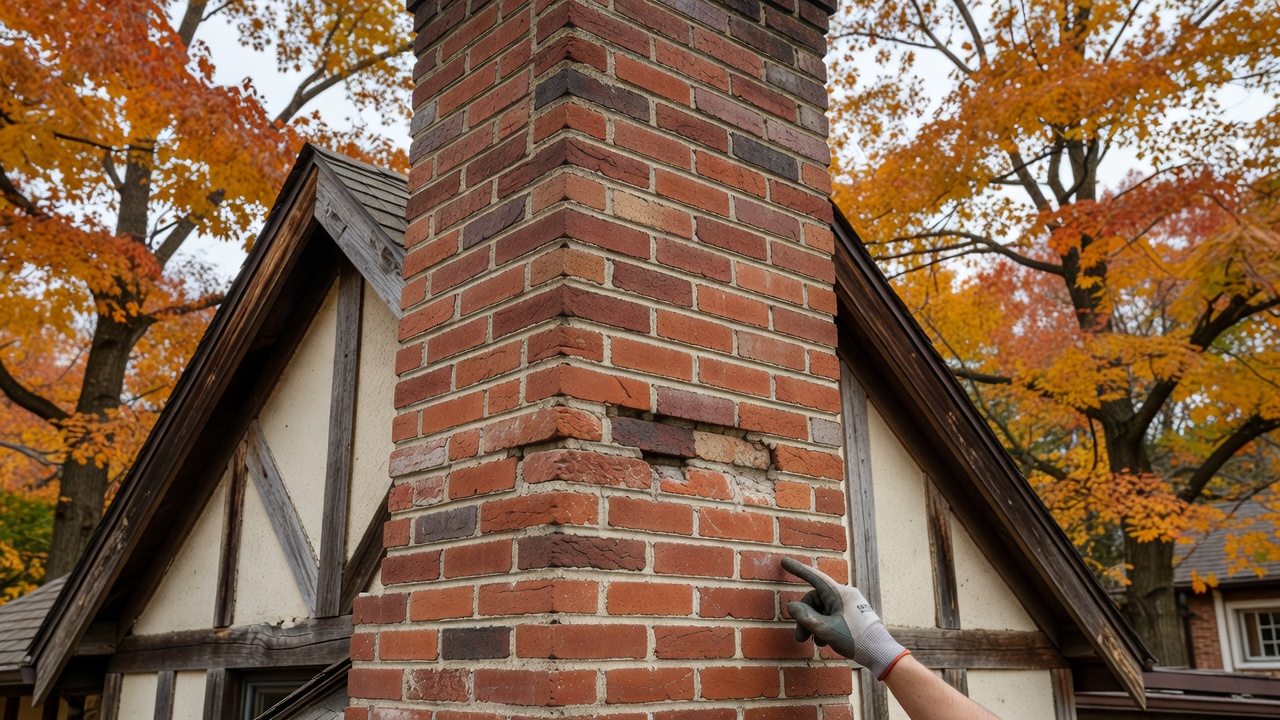
We work on chimneys throughout Short Hills, Millburn, Maplewood, and Summit, and the mortar failures we see most often are not dramatic collapses. They are quiet. Joints that look slightly recessed from the driveway can be eroded a quarter inch or more by the time a technician gets on the roof with a probe. By then, water has usually been getting into the masonry for at least a season or two.
What Chimney Repointing in Short Hills NJ Typically Costs
For a single-flue chimney on a standard two-story Colonial or Tudor in Short Hills, repointing runs roughly $500 to $1,800 depending on the size of the chimney, how much of the mortar has deteriorated, and how accessible the stack is. Larger chimneys with two or three flues, or stacks on steep rooflines, can run higher. We have seen jobs on the larger Tudors along Hobart Avenue and Old Short Hills Road come in closer to $2,000 to $2,500 when the chimney is tall and the deterioration is widespread.
Those ranges assume straightforward repointing only. They do not include crown repair, spalling brick replacement, or flashing work, which are separate line items if they are needed.
A simple look at what moves the price
| Factor | Lower cost | Higher cost |
|---|---|---|
| Chimney size | Single flue, standard height | Double or triple flue, tall stack |
| Extent of deterioration | Partial repointing of one face | Full perimeter, all four sides |
| Roof pitch and access | Walkable slope, easy staging | Steep pitch, scaffold required |
| Mortar match | Standard mix | Lime-based mix for historic masonry |
| Add-on repairs found during work | None needed | Crown crack, spalled bricks, flashing |
What Is Included, and What Is an Add-On
Standard repointing includes grinding out deteriorated mortar to a proper depth, usually three-quarters of an inch, and packing in new mortar that matches the profile and composition of the original. A thorough job also covers cleaning the work area and a visual check of the crown and cap while the technician is on the roof.
What is not included in a repointing quote is chimney cleaning, liner inspection, flashing replacement, or brick replacement. If a technician spots a cracked crown or a loose brick during repointing, those are separate estimates. We always point out what we find, but we do not bundle repairs together without a conversation first.
The Safety Problem With Waiting
Last fall, a homeowner on Springfield Avenue in Millburn called us because her fireplace was producing an unusual amount of smoke when she lit her first fire of the season. When our technician got on the roof, the mortar joints on two faces of the chimney were eroded deeply enough that daylight was visible through sections of the stack from certain angles. Water had been entering the masonry, and the freeze-thaw cycles of the previous two winters had pushed the damage well past what a simple repointing would fix. What started as a $900 repointing job had become a $3,200 repair that included partial brick rebuilding and crown replacement.
The National Chimney Sweep Guild notes that New Jersey’s freeze-thaw climate is among the most damaging to masonry chimneys, causing spalling, cracked crowns, and deteriorating mortar joints that worsen each winter if left unaddressed. The older homes in Short Hills and throughout Millburn see this pattern every year. A chimney that looked stable in the spring can be meaningfully worse by November after a wet summer and an early freeze.
The National Fire Protection Association’s Standard 211 recommends that chimneys be inspected at least once a year for soundness and freedom from deposits. That recommendation exists partly because mortar failures are not always visible from ground level. Eroded joints allow water into the masonry, which accelerates brick deterioration, and in severe cases allows combustion gases to migrate through the chimney wall rather than up the flue. That is a carbon monoxide risk, not just a cosmetic one.
How to Avoid Overpaying
The most reliable way to avoid overpaying for repointing is to schedule an inspection before agreeing to a full repointing scope. Some chimneys need only partial work on one or two faces. A contractor who quotes full perimeter repointing without getting on the roof first is either guessing or padding. Any honest quote should specify which faces of the chimney are being repointed and why.
Also be cautious about quotes that bundle repointing with waterproofing treatment as a mandatory package. Waterproofing with a vapor-permeable sealant can be a good idea after repointing, but it is a separate service with its own cost, typically $200 to $400 for a standard chimney, and you should decide whether you want it after reviewing the inspection findings.
We serve homeowners throughout Livingston, Chatham, and Florham Park as well, and the same principle applies everywhere: the inspection drives the scope, not the other way around.
When to Schedule Repointing
Spring and early fall are the best windows for masonry work. Mortar needs sustained temperatures above 40 degrees Fahrenheit to cure properly, which makes mid-winter work difficult in New Jersey. For fall 2026, we recommend scheduling an inspection by September so that any repointing or repair work can be completed before the heating season begins. Waiting until November limits your options and makes it more likely that freeze-thaw damage will continue through winter 2026 and into 2027.
Have your chimney inspected recently? If not, that is the logical first step before any repointing quote makes sense.
Frequently Asked Questions
How do I know if my chimney needs repointing?
The most reliable way is a roof-level inspection by a certified chimney technician. From the ground, look for mortar joints that appear recessed, sandy, or crumbling between the bricks. White staining on the chimney exterior, called efflorescence, often indicates water is already moving through the masonry. Any of those signs in a Short Hills NJ home are worth having a technician assess before the next heating season.
How long does chimney repointing last?
When done correctly with mortar appropriate for the chimney’s age and brick type, repointing typically lasts 20 to 30 years. Using a mortar that is harder than the brick, which is a common mistake with historic masonry, can actually accelerate brick damage because the brick rather than the mortar absorbs the stress of freeze-thaw movement. This is one reason material selection matters, particularly on the older Tudor and Colonial homes common in Short Hills and Millburn.
Can I use my fireplace while mortar joints are deteriorating?
The answer depends on the severity of the deterioration. Mildly weathered joints are a maintenance issue. Joints that are deeply eroded, missing in sections, or showing gaps through the chimney wall can allow combustion gases to escape into the structure rather than vent properly through the flue. The National Fire Protection Association’s Standard 211 requires an inspection to confirm a chimney is sound before use. If you are not certain of your chimney’s condition, do not use it until a certified technician has evaluated it.
Schedule a chimney inspection with Short Hills Chimney before the fall 2026 heating season so we can assess the condition of your mortar joints and give you a specific, roof-level repointing scope if one is needed. Contact us at shorthillschimney.com to book your appointment.
Related from Short Hills Chimney: Honest Chimney Repointing Short Hills NJ