
Chimney Inspection in Short Hills, NJ
A chimney inspection is a structured, professional assessment of your chimney’s interior flue, exterior masonry, liner, and connected appliances designed to catch deterioration, blockages, or fire hazards before they become emergencies. It matters because a chimney that looks fine from the living room can be silently failing in ways that lead to carbon monoxide intrusion or a flue fire. For homeowners in Short Hills, where a significant share of homes was built between the 1920s and 1960s and rely on original clay-tile-lined chimneys, a qualified annual inspection is one of the most straightforward safety steps you can take.
Here is the situation Short Hills Chimney runs into most often: a homeowner notices a faint smoky smell during the first fire of the season, assumes it is just dust burning off, and doesn’t think about it again until the smell returns stronger a few weeks later. By that point a closer look reveals a cracked flue tile that has been allowing combustion gases to seep into the chase for who knows how long. The problem was never dramatic. It was gradual. A routine chimney inspection would have caught the cracked tile the previous spring, before a single fire was lit.
That pattern slow deterioration that only reveals itself at an inconvenient moment is exactly why inspections exist and why we lead with them before any other service.
Who Actually Needs a Chimney Inspection (and When)
The National Fire Protection Association standard NFPA 211 recommends that chimneys, fireplaces, and vents be inspected at least once a year. In practice, that means every homeowner with a wood-burning fireplace, a gas insert, an oil furnace flue, or a wood stove connected to a masonry chimney is on the list.
There are also specific moments when an inspection becomes urgent rather than routine:
- You just purchased a home. Short Hills real estate moves quickly and buyers often inherit chimneys they know almost nothing about. A Level 2 inspection before your first fire is the standard recommendation — and your home inspector’s general chimney note does not substitute for it.
- You switched fuel types — for example, converting from oil heat to gas and routing the new appliance into the existing flue.
- There was a chimney fire, even one that seemed minor. A brief, hot chimney fire can crack tiles and warp metal liners in ways that are invisible without camera equipment.
- You haven’t used the fireplace in two or more years. Animal nesting, debris accumulation, and moisture damage progress whether or not the fireplace is in use.
- A significant storm moved through the area. Essex County weather particularly nor’easters and the occasional severe thunderstorm — can dislodge chimney caps, crack mortar joints, and shift chimney crowns.
The Three Levels of Inspection and Which One Applies to You
Chimney inspections follow a tiered system established by NFPA 211. Understanding the difference matters because the right level is determined by your situation, not by what is cheapest or fastest.
Level 1
A Level 1 inspection covers all readily accessible portions of the exterior and interior chimney: the firebox, damper, smoke chamber, readily visible flue, cap, crown, and exterior masonry. No special equipment is required. This is the appropriate choice when nothing has changed same appliance, same fuel, no known events, and the chimney has been in continuous normal use. Most annual maintenance inspections fall here.
Level 2
A Level 2 inspection includes everything in Level 1 plus a video scan of the full flue interior using a chimney camera. It is required any time you sell or purchase a home, change the heating appliance or fuel type, or after any event storm damage, chimney fire, seismic activity that might have affected the chimney’s structure. In our experience, Level 2 is also the right call for Short Hills homes with original clay tile liners that have not been camera-inspected in the past several years. Tile deterioration and mortar joint failure are simply not visible any other way.
Level 3
A Level 3 inspection is reserved for situations where a serious hazard is suspected but cannot be confirmed with camera equipment alone. It may involve removing portions of the chimney structure to access and assess concealed areas. Level 3 is uncommon and is only recommended when Levels 1 and 2 have identified evidence that warrants it.
What Our Inspection Process Looks Like, Start to Finish
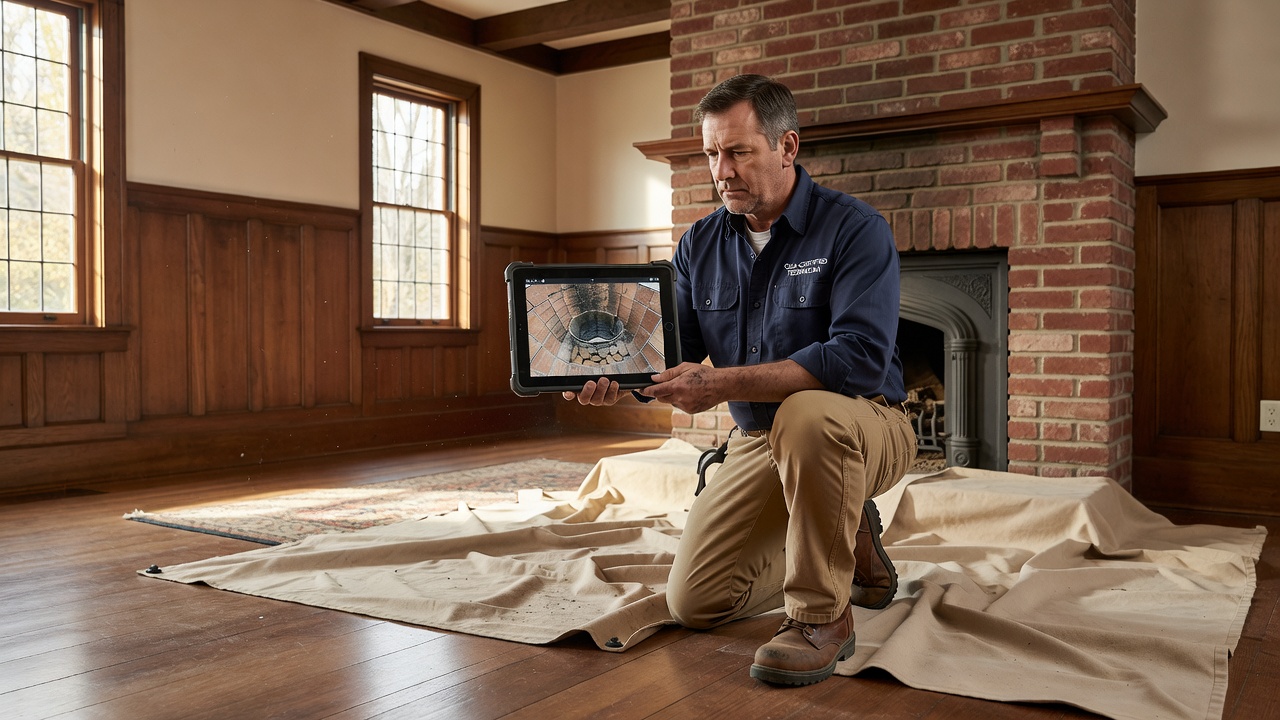
We schedule inspections on a date that works for you and arrive within the agreed window no all-day wait. Before we touch anything, we lay drop cloths at the fireplace opening and in the work area. We treat Short Hills homes the way we’d want someone treating ours.
The inspection itself follows a consistent sequence:
- Exterior assessment. We start at the roofline: chimney cap condition and fit, crown inspection for cracking or erosion, flashing integrity at the roof-chimney junction, mortar joint condition on exposed brick or stone, and any signs of efflorescence (white mineral staining that signals water infiltration).
- Firebox and smoke chamber. We examine the firebox floor and walls for cracking or spalling, check the damper for operation and seal, and assess the smoke chamber a curved transition zone above the firebox that is frequently damaged and frequently ignored.
- Flue interior — camera scan (Level 2). When a camera scan is included, we run a high-resolution chimney camera from the firebox upward through the full flue length, capturing real-time video. You are welcome to watch on the monitor. We note tile cracking, missing mortar joints, liner displacement, blockages, and any animal intrusion evidence.
- Written report. Every inspection ends with a written summary of findings, categorized by urgency: immediate safety concern, recommended repair, or monitor at next inspection. We do not pad the report with recommendations designed to sell services. If everything looks sound, we tell you that plainly.
What the Inspection Report Covers
A Short Hills Chimney inspection report documents the following for every chimney assessed:
- Chimney height and flue dimensions (important for proper draft)
- Liner type — clay tile, cast-in-place, or stainless-steel insert and liner condition
- Firebox integrity: cracks, spalling brick, deteriorated refractory panels
- Damper operation and seal condition
- Smoke chamber condition
- Cap and crown condition
- Flashing condition and water infiltration evidence
- Any observable blockages or animal activity
- Carbon monoxide risk assessment based on appliance type and flue condition
- Recommended next steps, prioritized clearly
If we find something that needs repair, we explain exactly what it is, why it matters, and what fixing it involves in plain language. We don’t assume you know what a smoke chamber corbel is, and we won’t talk past you.
Why Short Hills Homeowners Trust Us With This Assessment
Short Hills sits within the Millburn Township section of Essex County, and a large portion of the housing stock here is older than most people realize. The Tudor-style homes along Hobart Avenue and the colonials off Chatham Road frequently have chimneys with the original 1930s clay tile liners tile that was designed to last decades but is now approaching a century of freeze-thaw cycling, acid condensate from modern gas appliances, and general mortar joint fatigue. We have inspected hundreds of these chimneys and know exactly what to look for in structures of that era.
We are chimney specialists. We do not offer roofing, HVAC, or general contracting services. Our entire focus is chimneys, which means when we conduct your inspection, we are not mentally categorizing your fireplace as a side job. We are CSIA-certified, and every inspection we perform adheres to NFPA 211 methodology.
We also have no financial incentive to manufacture problems. Our business in Short Hills depends on repeat customers and neighbor referrals the kind of community were word travels quickly. Recommending unnecessary repairs would be worse for us than simply reporting what we find.
Frequently Asked Questions About Chimney Inspection in Short Hills
My gas fireplace barely gets used — does it still need an annual inspection?
Yes, and in some ways a gas appliance deserves particular attention. Gas combustion produces water vapor and mildly acidic byproducts that degrade clay tile liners more aggressively than wood smoke over time. A flue that is rarely used can also develop animal nesting or moisture issues that go undetected. NFPA 211 applies to gas appliances the same as wood-burning ones. An annual Level 1 inspection on a lightly used gas fireplace is a short appointment that gives you real peace of mind.
I had a home inspection when I bought my Short Hills house — is that the same as a chimney inspection?
No. A general home inspector evaluates the chimney visually from ground level or the roofline and checks for obvious exterior problems. They are typically not equipped with a chimney camera and are not trained as chimney specialists. NFPA 211 specifically requires a Level 2 inspection including a video scan when ownership of a property changes hand. The two inspections are complementary; the home inspector covers the whole property broadly, and a chimney specialist goes deep on the flue system specifically.
How long does a chimney inspection take, and do I need to be home the entire time?
A Level 1 inspection typically takes 45 to 60 minutes for a single-flue system. A Level 2 inspection with a camera scan generally runs 60 to 90 minutes, and longer if there are multiple flues. We ask that a homeowner or trusted adult representative be present for the full inspection so we can walk you through the findings directly and answer questions on the spot. Reviewing the camera footage together, right then, is one of the most useful parts of the visit you see exactly what we see, with no translation required.
Schedule Your Chimney Inspection in Short Hills
If you haven’t had your chimney inspected in the past twelve months or if you’ve moved into a Short Hills home and aren’t certain of the last inspection date now is the right time to get on the schedule. Early fall appointments fill up quickly as homeowners prepare for heating season. A spring or summer inspection gives you more flexibility and lets you address any repairs before the first cold night arrives.
Contact Short Hills Chimney to book your Level 1 or Level 2 chimney inspection. We serve Short Hills and surrounding Essex County communities. Reach us by phone or through our online contact form, and we’ll get you a confirmed appointment no pressure, no upsell, just a straight assessment of what your chimney looks like today.
Related from Short Hills Chimney: Chimney Sweep Services in Short Hills, NJ · Smart Chimney Cap Installation Short Hills NJ · Urgent Chimney Sweep Short Hills NJ