
Reliable Chimney Liner Installation Short Hills NJ: 2026 Guide for New Providence Residents
Roughly one in three older homes we inspect across Essex and Union Counties has a compromised liner — cracked, missing sections, or a clay tile system that was never sized correctly for the appliance it serves. Chimney liner installation in Short Hills NJ comes up constantly in our work, and lately we have been fielding more calls from New Providence, where a number of the Tudor and Colonial homes off Livingston Avenue and Murray Hill Road were built in the 1940s and 1950s with original terracotta liners that are now showing their age. The liner is not a cosmetic part of your chimney. It is the primary barrier between combustion gases and the framing of your home, and when it fails, the consequences can move fast.
A homeowner on Mountain Avenue in New Providence called us last fall after a gas company technician refused to reconnect service to their furnace. The tech had spotted heavy flaking inside the flue during a routine check sections of clay tile had broken away and were sitting at the base of the liner. The homeowner assumed it was a minor repair. Our technician ran a Level II inspection with a camera and found the liner had been deteriorating for several seasons, likely accelerated by the freeze-thaw cycles that hit this part of Union County particularly hard. What looked like a one-afternoon fix turned out to be a full stainless steel liner installation. The family had been running a gas appliance through a compromised flue without knowing it.
We tell that story not to alarm anyone, but because it captures exactly the diagnostic gap that gets homeowners into trouble visible symptoms that seem minor on the surface, with serious causes underneath.
What Goes Wrong With Chimney Liners, and How We Diagnose It
The problems we see most often fall into a handful of categories. Understanding each one matters, because the fix is different in every case and the symptoms can overlap.
Cracked or Spalled Clay Tile
Symptoms: white efflorescence on the exterior chimney face, chunks of tile or mortar in the firebox, or a metallic scraping smell during appliance operation. The cause is almost always thermal stress compounded by water infiltration. Clay expands and contracts with heat; when moisture gets into hairline cracks and then freezes, it forces the tile apart. According to the National Chimney Sweep Guild (NCSG), New Jersey’s freeze-thaw climate cycles are among the most damaging to masonry chimneys, causing spalling, cracked crowns, and deteriorating mortar joints that worsen each winter if left unaddressed. A homeowner can see large tile fragments in the firebox, but diagnosing how far the damage extends into the flue requires a camera. We have found intact-looking exterior chimneys in Millburn and Summit with liner sections that were essentially rubble inside the column.
The fix: Depending on severity, we either reline with a continuous stainless steel liner or, in less extensive cases, use a poured-in-place liner system that encapsulates the damaged tile. A partial patch is rarely adequate if one section has failed, adjacent sections are typically compromised as well.
Can this be prevented? Annual inspections catch early cracking before it progresses. A properly installed chimney cap also limits the water intrusion that accelerates the problem.
Liner Sized for the Wrong Appliance
This is a problem that generates no obvious smoke or smell in the early stages, which makes it one of the more dangerous. When a homeowner in Short Hills converts from an oil furnace to a high-efficiency gas unit, the new appliance typically exhausts at a much lower flue temperature and produces a different volume of combustion gas. The original 8-inch liner that served the oil boiler is now oversized for the gas appliance. Oversized liners allow exhaust gases to cool too quickly, leading to condensation, draft problems, and carbon monoxide spillage. We have diagnosed this exact configuration in homes across Chatham and New Providence where the conversion happened years ago and nobody flagged the liner mismatch.
The fix: Install a correctly sized stainless-steel liner typically 4 or 6 inches for most modern gas appliances that creates the proper draft velocity and prevents condensation. This is not a homeowner project. Sizing calculations depend on the BTU input of the appliance, the height of the flue, and the offset geometry of the chimney.
Can this be prevented? Any HVAC contractor doing an appliance conversion should flag the liner compatibility question. Ours often do not, which is why we see this regularly.
Failed Flexible Liner Connections and Seams
Flexible stainless liners installed more than 15 years ago sometimes have junction seams or connector fittings that have corroded or separated, particularly if the wrong alloy grade was used for the fuel type. Symptoms include carbon monoxide detector alerts, draft reversal, or a persistent sulfur smell near the appliance. The liner may look fine from the cleanout, but a camera inspection into the full length of the flue tells a different story.
The fix: Depending on where the failure is, we can sometimes replace a damaged section and re-terminate correctly. In other cases, a full liner replacement is more cost-effective than trying to repair a 20-year-old flexible run that is likely corroded in multiple spots.
Can this be prevented? Using the correct alloy grade for the fuel 304 stainless for gas, 316Ti for oil extends liner life significantly. We always specify this upfront.
No Liner at All
Older homes in Maplewood and West Orange and a surprising number in New Providence were built before liner requirements existed. The NFPA’s Standard 211 recommends that chimneys, fireplaces, and vents be inspected at least once a year for soundness, freedom from deposits, and correct clearances, but in pre-code homes there was often nothing to inspect. An unlined masonry flue allows heat and combustion gases direct contact with the surrounding mortar and framing. We have opened cleanout doors in homes and found char marks on the framing behind the firebox.
The fix: Install a liner. This is not optional, and it is not a repair that improves incrementally either the flue is properly lined or it is not.
What a Homeowner Can Actually Handle
We are direct about this with every customer. A homeowner can safely clean accessible surfaces of a firebox, replace a damper handle, and install a new chimney cap on a single-flue chimney from a properly secured ladder. Those are legitimate DIY tasks. What falls outside that range is anything inside the flue column: inspecting liner integrity, diagnosing draft problems, selecting liner material and diameter, or installing any portion of a liner system. The geometry of a chase, the clearances at the top plate, and the alloy selection are not decisions that should be made from a YouTube tutorial. The U.S. Fire Administration reports that heating fires account for approximately 15% of all residential fires, and a significant share of those trace back to inadequate or improperly installed venting components.
We also see DIY liner installations that were started and abandoned usually because the installer hit an offset or a tight bend in the flue, they were not prepared for. Extracting a partially installed liner and starting over costs more than hiring a professional from the outset.
Chimney Liner Installation Short Hills NJ: What the Process Looks Like
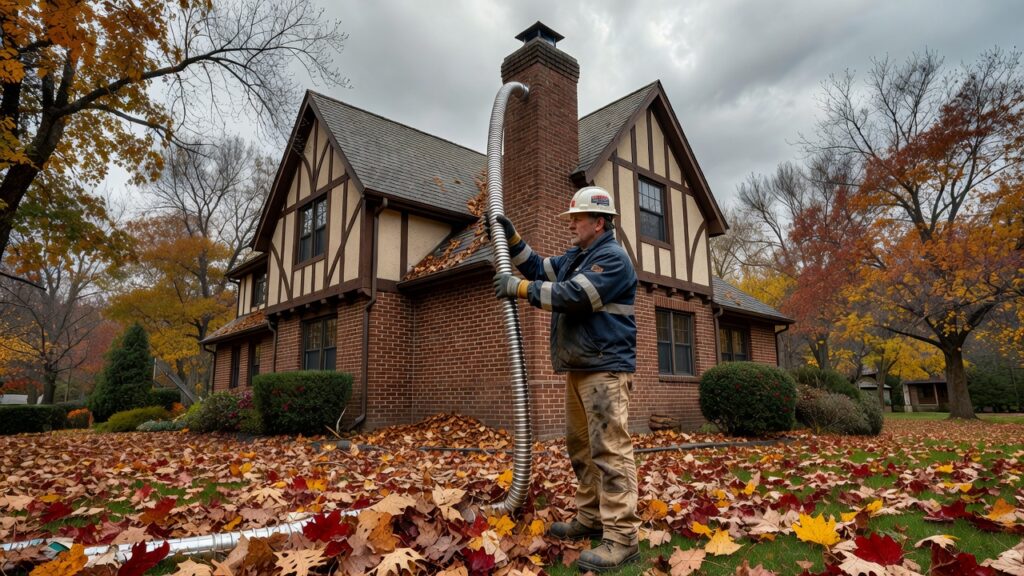
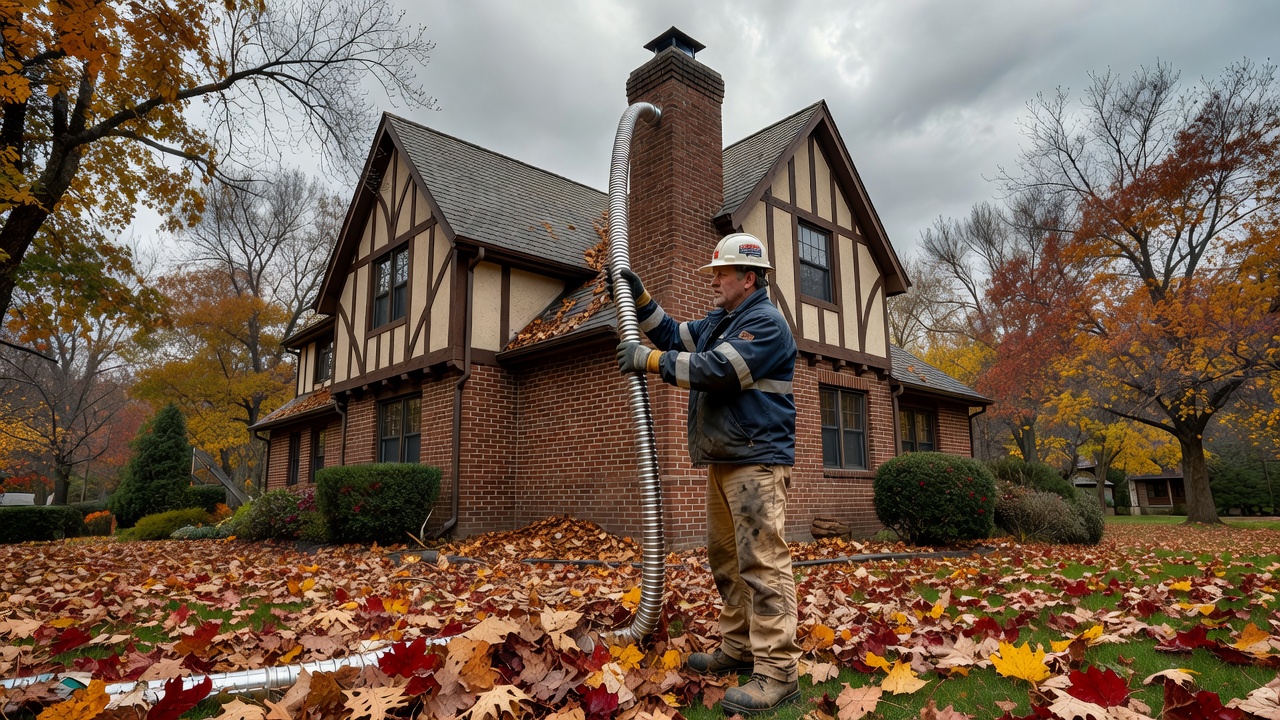
When our team comes out to a New Providence or Short Hills home for a liner installation, we start with a camera inspection to document the existing condition and measure the flue dimensions. We select the liner diameter based on appliance specifications, calculate the alloy requirements, and confirm the top termination height meets clearance codes. Installation on a single-story Colonial typically takes four to six hours. We pull the liner through from the top, connect it at the appliance collar, insulate the annular space where required, and install a top plate and rain cap. Before we leave, we verify draft with the appliance running and check for CO spillage at the appliance draft hood. That final step is not optional.
The Chimney Safety Institute of America (CSIA) notes that creosote accumulation is the leading cause of chimney fires, and that annual inspection and cleaning are the baseline standard for safe operation but a properly installed liner is what makes those annual cleanings meaningful. Without a sound liner, you are cleaning a system that cannot safely contain combustion products.
Frequently Asked Questions
How do I know if my chimney liner needs to be replaced rather than repaired?
The honest answer is that you usually cannot tell without a camera inspection. Surface damage visible from the firebox or cleanout is rarely the full picture. Our technicians use a video scan of the full flue length to assess how many sections are affected, whether the damage is localized or systemic, and whether the liner alloy is appropriate for the current appliance. In our experience serving New Providence and Short Hills, homes with liners older than 25 years and any visible cracking almost always warrant full replacement rather than patchwork repair.
What type of liner is best for a gas appliance versus a wood-burning fireplace?
For gas appliances, we typically install 316Ti stainless steel flexible liner with appropriate insulation wrap this alloy handles the acidic condensate that gas combustion produces. For wood-burning fireplaces, 304 stainless or a poured-in-place liner system both work well, though the sizing calculation differs because wood fires burn at higher temperatures and produce more volume. The appliance manufacturer’s venting specifications are always the starting point for that decision.
Will a new chimney liner affect my homeowner’s insurance or a home sale?
It can, in a positive direction. The Insurance Information Institute notes that a failed chimney inspection can delay or derail a real estate transaction, and buyers’ attorneys in this area frequently request documentation of liner condition. Several of our New Providence and Short Hills customers have had liner installations become a negotiating point in a sale either the seller completes the work before closing, or the cost is credited. Having a documented, properly installed liner with our signed inspection record on file gives you a clean answer if the question comes up.
Schedule Your New Providence Chimney Liner Inspection
Don’t wait for cracked clay tiles, draft problems, damaged liner connections, or an outdated flue to become a larger safety concern. A professional camera inspection can determine the condition of your liner and whether it needs repair, replacement, or proper sizing for your current appliance.
Short Hills Chimney serves New Providence, Short Hills, Millburn, Summit, Chatham, and surrounding Essex and Union County communities. Our local team will inspect your flue, explain what we find, and give you a straightforward recommendation before any work begins.
Call Short Hills Chimney or visit shorthillschimney.com to schedule your chimney liner inspection today.
Related from Short Hills Chimney: Smart Chimney Cap Installation Short Hills NJ