
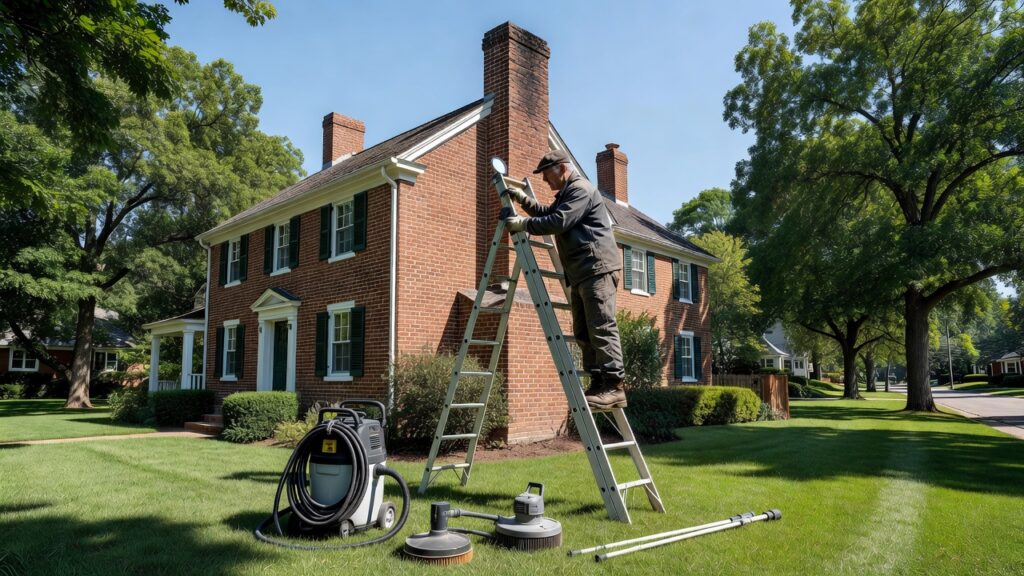
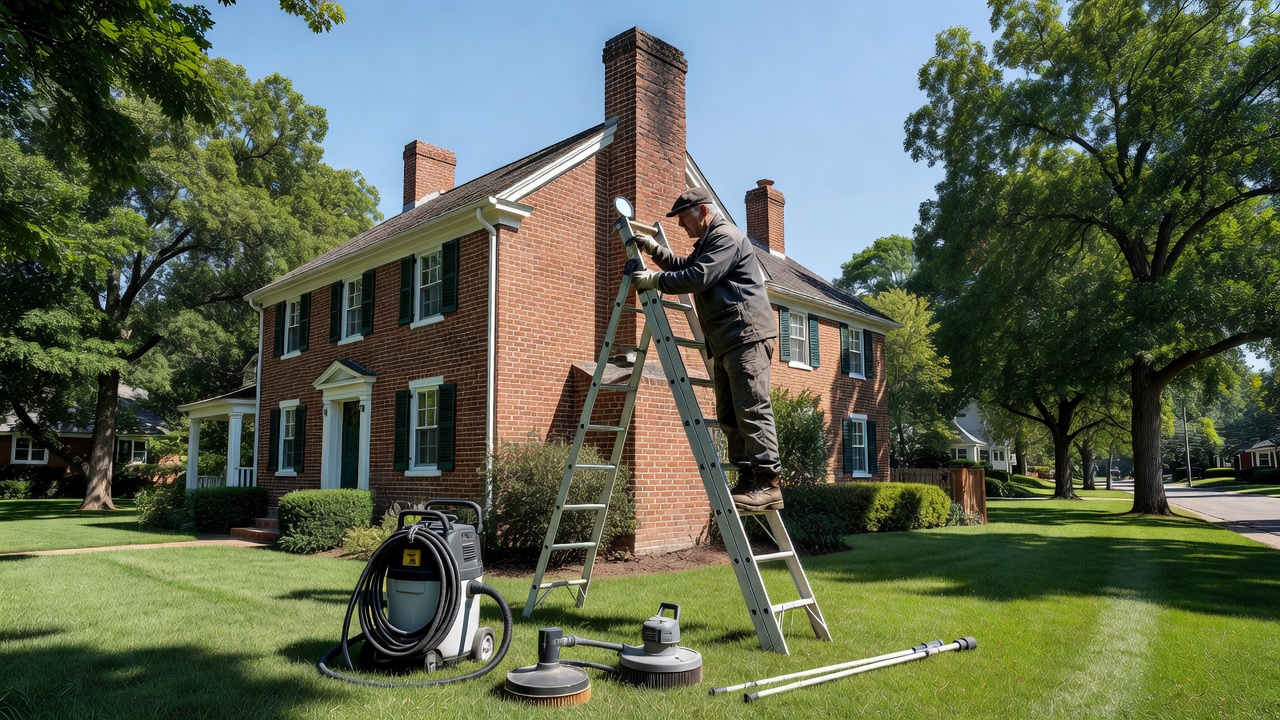
Smart Chimney Sweep Summit NJ: 2026 Guide for Berkeley Heights Residents
Every October, we get a wave of calls from homeowners across Summit, Berkeley Heights, and the surrounding Union County towns who lit their first fire of the season and immediately regretted it smoke rolling back into the living room, a sharp acrid smell, or worse, the distinct crackling sound of something burning inside the flue that shouldn’t be. If you’re searching for a chimney sweep in Summit NJ or just across the border in Berkeley Heights, that urgency is legitimate. Waiting until the problem announces itself is not a strategy.
This post is about timing and honesty. We’ll tell you what a capable homeowner can actually handle themselves, what genuinely needs a licensed chimney sweep, and why the calendar matters more than most people realize.
What Happened on Orchard Road
Last fall, a homeowner on Orchard Road in Berkeley Heights called us in mid-November. They’d been burning wood for about three weeks before noticing a strong smoky odor that lingered even after the fire was out. When our technician opened the clean-out door, the firebox showed a heavy glaze of stage-two creosote thick, tar-like, and glossy. The homeowner had swept the accessible firebox area themselves in September, which was the right instinct. But they had no way to assess what was happening ten feet up in the flue, and that’s where the dangerous material had been building since the previous winter.
According to the Chimney Safety Institute of America (CSIA), the leading cause of chimney fires is the accumulation of creosote, a highly flammable byproduct of wood combustion. Chimneys should be inspected and cleaned at least once per year. What the homeowner on Orchard Road had done wasn’t wrong — it just wasn’t complete. That distinction matters.
What You Can Safely Handle Yourself
We’re not going to tell you that every chimney task requires a professional. That’s not true, and it’s not how we’d talk to a neighbor. Here is what a reasonably handy homeowner can manage without calling anyone:
- Visual firebox inspection. Get a flashlight and look at the firebox walls, damper plate, and throat area. Cracks in the refractory panels, rust on the damper, or chunks of mortar on the firebox floor are things you can spot yourself and report accurately when you do call a sweep.
- Cleaning the firebox interior. Ash removal and basic brushing of the accessible firebox walls not the flue — is something a homeowner can do safely with a good ash vacuum and a stiff brush. Wear a respirator. It’s dusty, unpleasant work, but not dangerous if you’re not going above the smoke chamber.
- Cap and crown check from the ground. A pair of binoculars and a clear day will let you see whether your chimney cap is in place and whether the crown shows obvious cracking. You don’t need to go on the roof to make an initial assessment.
- Monitoring smoke behavior. Pay attention to how your fire draws. Sluggish draft, smoke puffing back, or a fire that won’t stay lit are all useful observations to share with a technician. You’re not diagnosing you’re gathering information.
When You Need a Professional Chimney Sweep in Summit NJ
There’s a shorter list of situations where DIY is not just inadequate — it’s genuinely risky. Not because we want the work, but because the tools, the liability, and the physics of what’s happening inside a flue are not manageable from ground level with a hardware store brush kit.
- Any cleaning above the smoke shelf. The flue liner is where creosote accumulates most heavily, and it requires proper rotary equipment, a commercial vacuum with HEPA filtration, and someone who can identify what they’re seeing. A hardware store brush set pushed up from the firebox can break tile liners, dislodge deteriorated mortar, and give you a false sense of completion.
- Stage-two or stage-three creosote. If the deposit is glazed, tar-like, or puffed and crunchy, standard brushing won’t remove it. It requires chemical treatment followed by mechanical removal. Attempting to burn it off a common homeowner instinct is exactly how chimney fires start.
- Any work on the liner, crown, or flashing. These are structural and weatherproofing elements. A misapplied crown coat or improperly sealed flashing can drive water into your home for years before you trace the source. The National Fire Protection Association (NFPA) Standard 211 recommends that chimneys, fireplaces, and vents be inspected at least once a year for soundness, freedom from deposits, and correct clearances which includes these components.
- Pre-sale inspection documentation. The Insurance Information Institute notes that a failed chimney inspection can delay or derail a real estate transaction. If you’re selling a home in Summit, Chatham, or Livingston, you need a written Level II inspection from a credentialed sweep not a self-assessment.
- Gas fireplace and insert service. Gas appliances have venting configurations, thermocouple function, and burner orifice considerations that are outside the scope of DIY maintenance and often outside local code compliance if not serviced by a qualified technician.
The Real Cost of Waiting Until November
Berkeley Heights and the surrounding towns Summit, Millburn, Maplewood, Florham Park all sit in the same freeze-thaw zone. According to the National Chimney Sweep Guild (NCSG), New Jersey’s climate cycles are among the most damaging to masonry chimneys, causing spalling, cracked crowns, and deteriorating mortar joints that worsen each winter if left unaddressed. Every year that service gets pushed to late October or November, you’re adding one more season of water infiltration, one more winter of freeze expansion working at existing cracks.
From a scheduling standpoint, July through early September is genuinely the best window to book a chimney sweep in Summit NJ and the Berkeley Heights area. Our schedule in that window is open, the work can be done unhurried, and if we find something that needs repair a cracked liner section, a deteriorating crown there’s time to address it before the first cold weekend in late October when you actually want to use the fireplace.
By contrast, a homeowner who calls us on November 8th with a cracked flue tile faces two options: don’t use the fireplace, or use it knowing there’s a gap in the liner. Neither is good. The U.S. Fire Administration reports that heating fires account for approximately 15% of all residential fires, with chimneys and solid-fuel appliances being a leading contributing factor. The risk is real, and it concentrates in the exact weeks when people are scrambling to get service done after waiting too long.
We’re not trying to manufacture urgency. The urgency is already built into the calendar. Summer appointments are easier to schedule, easier to complete thoroughly, and leave room for any follow-up work before winter 2026/2027. That’s just how it works.
Frequently Asked Questions
How often should I schedule a chimney sweep in Summit NJ or Berkeley Heights?
The CSIA and NFPA both recommend at least once per year for any chimney that sees regular use. If you burn wood frequently more than 50 fires per season or if your fireplace is your primary heat source, twice yearly is reasonable. Gas fireplaces still need annual inspection even though they produce less visible buildup.
What’s the difference between a chimney cleaning and a chimney inspection?
Cleaning removes combustible deposits creosote, debris, animal nesting material from the flue and firebox. An inspection evaluates the structural integrity of the liner, crown, flashing, smoke chamber, and damper. They’re related but distinct services. We typically perform both together, but a cleaning alone does not certify that the system is structurally sound or code compliant.
Can I use my fireplace in Berkeley Heights while waiting for a chimney sweep appointment?
It depends on what you observed. If the system was professionally cleaned and inspected within the last year, a short wait is generally lower risk. If you’re seeing smoke rollback, smelling something unusual, hearing strange sounds in the flue, or haven’t had the system serviced in more than a year, we recommend holding off until a technician can assess it. Booking early in the season July or August eliminates this dilemma entirely.
Schedule Your Summit Chimney Sweep
Our technicians serve Berkeley Heights, Summit, Millburn, Short Hills, and communities throughout Union and Essex Counties. Whether you want to book a summer appointment before the fall rush or you’re dealing with something that can’t wait, we’re straightforward about what we find and honest about what actually needs to be done. Reach out to us at shorthillschimney.com or give us a call to get on the schedule while there’s still time to handle it right.
Related from Short Hills Chimney: Honest Chimney Repair Berkeley Heights NJ · Urgent Chimney Sweep Short Hills NJ