
What a Level 2 Chimney Inspection Short Hills NJ Actually Involves: 2026 Guide for Short Hills Residents
A level 2 chimney inspection Short Hills NJ is the standard required any time a home changes hands, after a chimney fire, or following a significant weather event. It goes deeper than a routine annual check, covering accessible attic and crawl space areas along with a video scan of the flue interior. Most homeowners can handle a few preparatory steps on their own, but the inspection itself and anything that follows genuinely requires a licensed professional.
What Prompted This Post
A homeowner on Morris Avenue in Union called us last November. She had a Colonial built in the 1950s with a woodburning fireplace in the living room and a second flue serving an oil furnace. Her home was under contract, and the buyer’s attorney had flagged that a level 2 inspection was required before closing. She had already gotten one quote from a national franchise and one from a local sweep she found online. Neither had explained what the inspection actually covered or what credentials she should be asking about. She just needed honest guidance.
That call is more common than people think, especially in older housing stock across Union, Short Hills, Millburn, and Summit. So we put this together as a straightforward reference.
What the Level 2 Standard Actually Requires
The National Fire Protection Association’s Standard 211 recommends that chimneys, fireplaces, and vents be inspected at least once a year for soundness, freedom from deposits, and correct clearances. A level 2 inspection satisfies that requirement and then some. It includes everything in a level 1 inspection plus examination of accessible portions of the attic, basement, and crawl spaces, assessment of the chimney structure from both inside and outside the home, and a video scan of the flue liner from top to bottom.
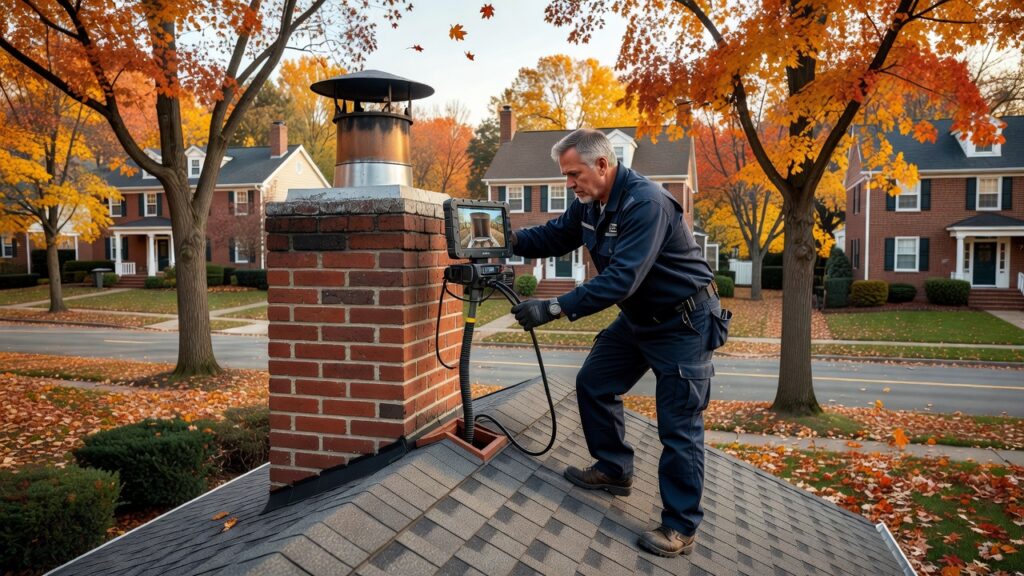
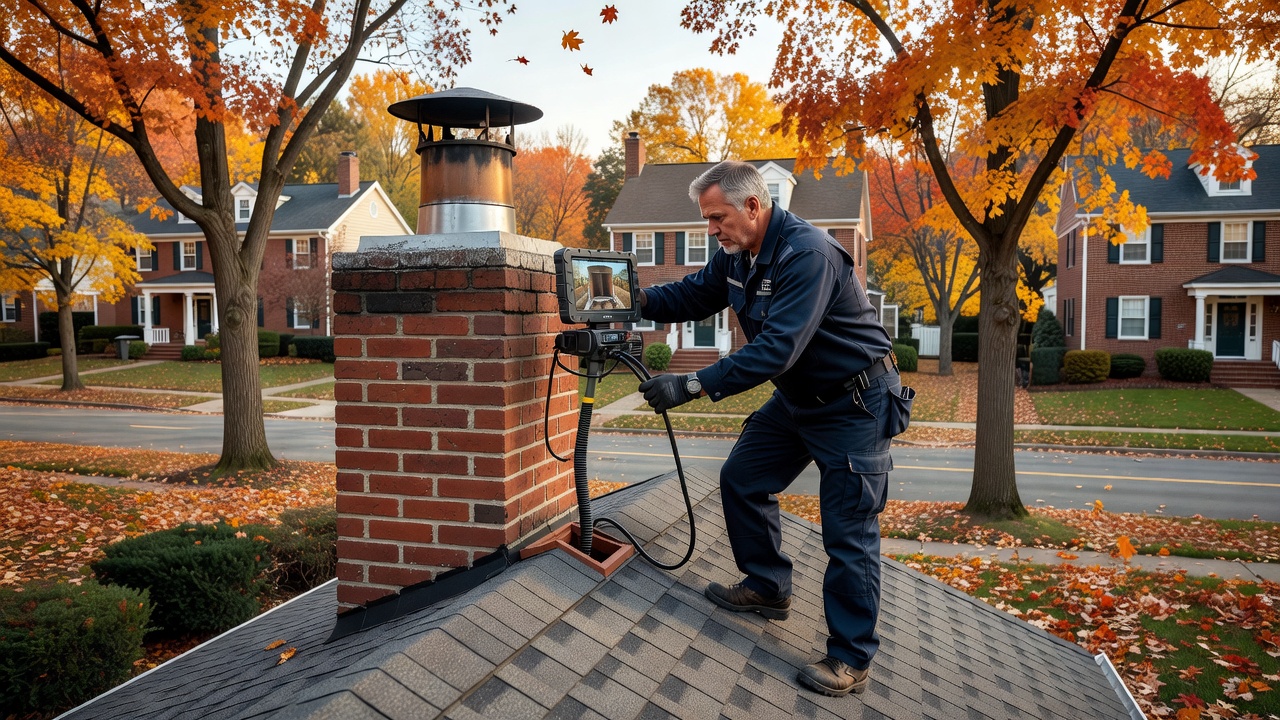
The video scan is what separates a level 2 from a standard annual sweep. It lets our technicians see cracks in clay tile liners, deteriorated mortar joints between flue sections, and areas where creosote has hardened into a glazed, third-degree deposit that cannot be removed with standard brushes. According to the Chimney Safety Institute of America, creosote accumulation is the leading cause of chimney fires, and chimneys should be inspected and cleaned at least once per year. In older homes throughout Essex County, we often find liner damage that has gone undetected for years simply because no one used a camera.
What a Capable Homeowner Can Reasonably Do
We will be direct here: there are things you can handle yourself before scheduling a level 2 inspection, and pretending otherwise would be wasting your time.
- Clear the firebox of ash and debris so the technician has unobstructed access from the bottom of the flue.
- Remove the damper cover if it detaches easily, or at least open it fully before the appointment.
- Walk around the exterior of the chimney at ground level and note any visible spalling, mortar gaps, or displaced cap. Photograph what you see. You do not need to climb anything.
- Check your records. If you have prior inspection reports, pull them. A technician who can compare a current video scan against a report from three years ago gives you much more useful information.
- Keep animals and children away from the fireplace area on inspection day. The video equipment and access rods take up real space.
None of that requires a contractor. It makes the inspection faster and the report more accurate.
What Genuinely Needs a Licensed Professional
The level 2 inspection itself is not a DIY project, and that is not a sales pitch. Here is the honest reasoning.
The video scanning equipment runs several thousand dollars and requires training to interpret correctly. A crack in a clay flue tile looks different from a joint separation, and the remediation for each is different. Misreading the footage leads to either unnecessary liner replacement or, worse, a missed structural defect that becomes a fire or carbon monoxide hazard. The U.S. Fire Administration reports that heating fires account for approximately 15 percent of all residential fires, with chimneys and solid fuel appliances being a leading contributing factor. That statistic reflects real houses, not abstractions.
Beyond the camera work, a level 2 inspection in New Jersey requires the sweep to assess clearances to combustibles in wall chases and attic framing, which means physical access to confined spaces with specific code requirements. Getting that wrong in a real estate context can void a disclosure, delay a closing, or create liability for the seller. The Insurance Information Institute notes that a failed chimney inspection can delay or derail a real estate transaction entirely, and we have seen exactly that happen on transactions in Millburn and Chatham when an unqualified inspection report did not hold up to scrutiny.
Chimney repair work following a level 2 finding, such as relining, crown rebuilding, or flashing correction, also belongs in the professional column. Not because homeowners lack skill, but because the materials require specific installation sequences, and in New Jersey, freeze-thaw cycling punishes improperly cured mortar work hard and fast. According to the National Chimney Sweep Guild, New Jersey’s freeze-thaw climate cycles are among the most damaging to masonry chimneys, causing spalling, cracked crowns, and deteriorating mortar joints that worsen each winter if left unaddressed.
Choosing the Right Contractor: Questions That Actually Matter
This is where the Union homeowner on Morris Avenue ran into trouble. Both contractors she called sounded competent on the phone. Neither volunteered the information that would have helped her evaluate them.
Ask these questions before you book:
- Is the technician CSIA certified? Certification is not a guarantee of quality, but it means the sweep has passed a nationally recognized exam and stays current with continuing education. Ask for the certification number and verify it at csia.org.
- Does the level 2 inspection include a recorded video of the flue interior, and will you receive a copy? Any legitimate inspection produces documentation. If the answer is no, keep looking.
- Will the same person who performs the inspection write the report? Some larger franchises send one crew to sweep and a second to write up findings. That creates gaps.
- Do they carry general liability and workers compensation insurance in New Jersey? Ask for a certificate, not just a yes. Chimney work involves ladders, roof access, and confined spaces. An uninsured worker injured on your property in Livingston or Florham Park creates a claim against your homeowner’s policy.
- Can they provide references from level 2 inspections in your general area? A contractor who works regularly in Short Hills and Summit understands the chimney configurations common to mid-century Colonials and Tudors here. That familiarity matters.
Red flags worth walking away from: a quote given without asking the age of your home or the fuel type, a price that seems too low to include video equipment and a written report, pressure to book repair work before the inspection report is even complete, and any contractor who cannot produce a current CSIA certification on request.
Price should not be the deciding factor on a level 2 inspection tied to a real estate transaction or a post-fire assessment. The report travels with the home. If it is incomplete or inaccurate, you carry that liability.
Frequently Asked Questions
When is a level 2 chimney inspection required in New Jersey?
A level 2 inspection is required any time a home changes hands, after a chimney fire or any event that may have caused structural damage, and when a homeowner converts to a different fuel type or installs a new appliance connected to an existing flue. Real estate transactions in Short Hills, Millburn, and Union commonly trigger this requirement through the buyer’s attorney or home inspection contingency.
How long does a level 2 chimney inspection take?
For a single flue system in a typical Colonial or Tudor in Short Hills or Summit, plan on 60 to 90 minutes. Homes with multiple flues, finished attic spaces requiring careful access, or significant creosote buildup requiring cleaning before the camera scan can run two hours or more. Our technicians will give you a realistic time estimate when they arrive and review the setup.
Can I use a level 2 inspection report from one contractor for a real estate closing, or does the buyer choose the inspector?
In most New Jersey transactions, the buyer has the right to select or approve the inspector. If you are the seller, having a pre-listing level 2 inspection done by a CSIA certified contractor with full documentation is still worthwhile. It gives you accurate information before negotiations and speeds the process. The Insurance Information Institute has noted that incomplete chimney inspection records are a common cause of closing delays, and having a thorough, credentialed report ready tends to move things forward.
Schedule Your Short Hills Level 2 Chimney Inspection
Whether you are preparing to sell your home, completing a real estate transaction, or checking for damage after a chimney fire, a Level 2 inspection can help uncover problems that a routine visual check may miss. A professional video scan allows technicians to assess the flue interior and document findings that may require further attention.
Short Hills Chimney serves Short Hills, Union, Millburn, Maplewood, Summit, and surrounding Essex and Union County communities. Our team provides flue video scanning and a written inspection report to help you understand your chimney’s condition and plan any necessary repairs.
Call Short Hills Chimney or visit shorthillschimney.com to schedule your Level 2 chimney inspection before the 2026 heating season.
Related from Short Hills Chimney: Chimney Liner Installation in Short Hills, NJ