
Trusted Chimney Inspection Berkeley Heights NJ: 2026 Guide for Florham Park Residents
Every October, our phones start ringing from homeowners across Florham Park, Berkeley Heights, and the surrounding Union and Morris County communities who lit their first fire of the season and noticed something was off a smoky living room, a draft coming the wrong direction, or a smell they couldn’t quite place. A chimney inspection Berkeley Heights NJ homeowners schedule before that first fire of fall 2026 is always a better outcome than one we’re doing in response to a problem. This guide walks you through exactly what that inspection involves, from the moment we pull up to your driveway to the moment we hand you a written report.
We work in a lot of older homes throughout this corridor the brick Colonials on Ridgewood Road in Florham Park, the Tudors tucked off Plainfield Avenue, center-hall Colonials in Berkeley Heights that were built in the 1950s and 60s and have never had their liner evaluated. These houses have character and they have chimneys that have been doing serious work for decades. Knowing what a thorough chimney inspection Berkeley Heights NJ actually covers helps you ask the right questions and understand the report you receive at the end.
Before You Start: What to Have Ready
You don’t need to prepare much, but a few things make the appointment run more smoothly. Know the age of your home and, if possible, whether the chimney has ever been relined. Pull out any records from previous sweeps or inspections — even a five-year-old report tells us something useful about how quickly your system is deteriorating. If you have a gas fireplace insert or a wood stove that was added after the home was built, make sure the original installation documents are accessible. And please, don’t light the fireplace the morning of the inspection. We need the firebox and flue to be at room temperature and free of fresh ash.
Step 1: The Exterior Assessment Comes First
Our technician starts on the outside. Before we ever look inside your firebox, we walk the perimeter and examine the chimney from ground level, then from the roof. We’re looking at the crown — the concrete cap that sheds water away from the flue opening and checking for cracking or spalling. We inspect the flashing where the chimney meets the roofline, because a failed flashing seal in a Florham Park winter is a direct path for water into your ceiling. According to the National Chimney Sweep Guild (NCSG), New Jersey’s freeze-thaw climate cycles are among the most damaging to masonry chimneys, causing spalling, cracked crowns, and deteriorating mortar joints that worsen each winter if left unaddressed. That observation matches exactly what we see every spring on chimneys that weren’t addressed the prior fall.
We also check the chimney cap itself. A missing or damaged cap means birds, squirrels, and rain have had direct access to your flue and in homes near the wooded corridors around Passaic River tributaries in Florham Park, nesting material in the flue is more common than most homeowners expect.
Step 2: Inspecting the Firebox and Smoke Chamber
Inside, we start at the firebox the firebox floor, the back wall, and the smoke shelf directly above the damper. Cracked firebricks are common in older homes and often get worse without anyone noticing, because the cracks are hidden behind years of soot. The smoke chamber is an area that rarely gets looked at by homeowners because it’s above the damper and requires a light and a mirror or camera. Mortar in this area tends to parget over time, and damaged parging creates turbulence that can push smoke and combustion gases back into the living space instead of drafting cleanly upward.
We test the damper for full operation it should open and close without sticking, and seal reasonably well when closed. A warped or corroded damper in a Berkeley Heights or New Providence home is one of the leading culprits behind heating bills that seem too high in winter. Cold air drops straight down through an improperly sealing damper all season long.
Step 3: Camera Inspection of the Flue Liner
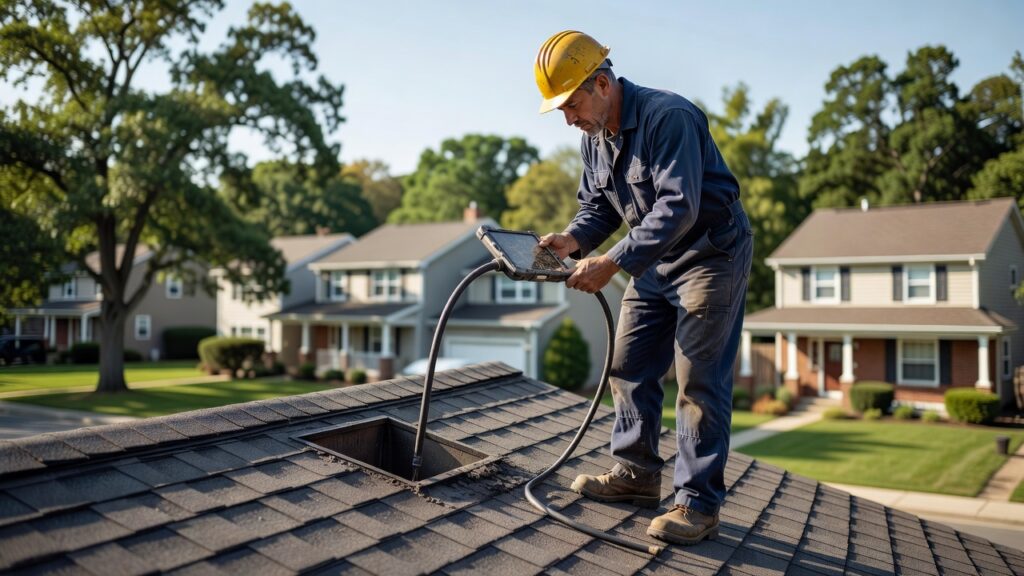
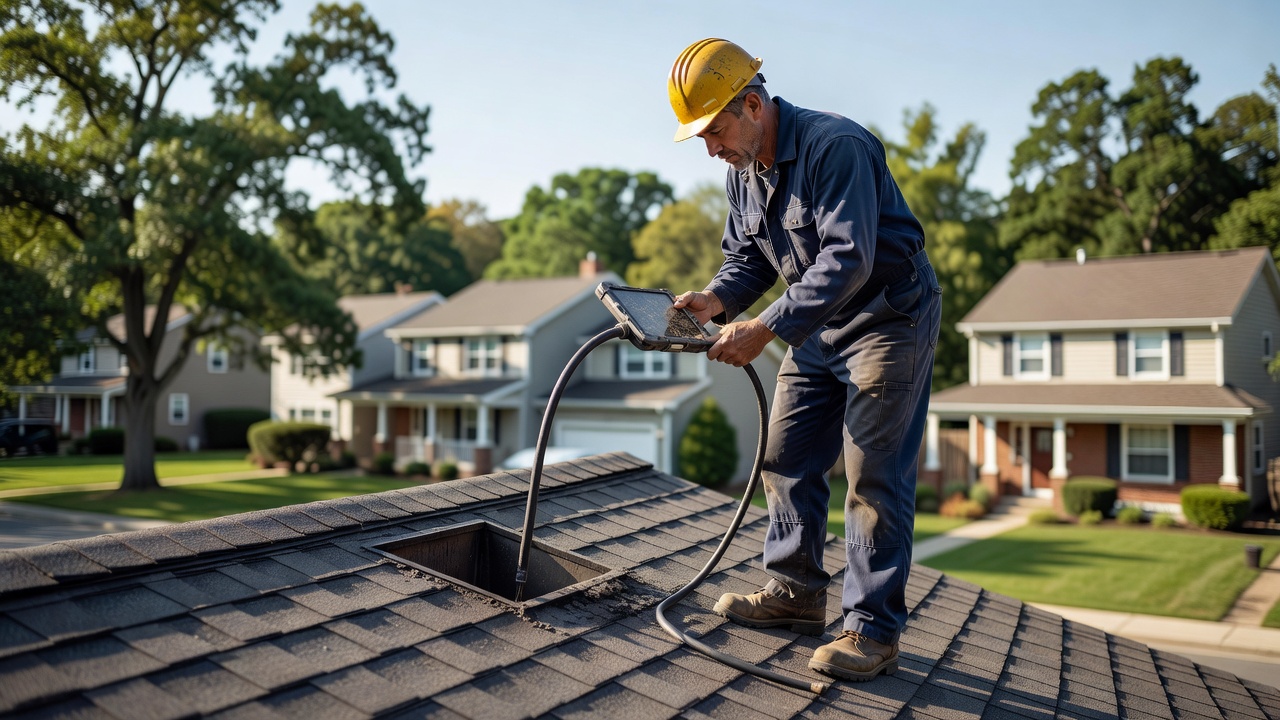
This is the step that separates a thorough inspection from a cursory one. The National Fire Protection Association (NFPA) Standard 211 recommends that chimneys, fireplaces, and vents be inspected at least once a year for soundness, freedom from deposits, and correct clearances and the liner condition is central to all three. We run a high-resolution camera from the top of the flue to the smoke chamber, capturing footage of the entire liner length.
What we’re looking for: cracks or gaps in clay tile liners, deteriorated mortar joints between liner sections, and any areas where the liner has shifted or collapsed. In homes built before the 1980s which includes a large portion of the housing stock in Florham Park and Summit clay tile liners have had forty-plus years of thermal expansion and contraction cycles. Damage isn’t the exception; it’s almost expected. We document everything on video and walk you through the footage before we leave.
Step 4: Creosote Assessment and Cleaning Evaluation
If you burn wood, we assess creosote accumulation during the inspection. According to the Chimney Safety Institute of America (CSIA), creosote is the leading cause of chimney fires, and chimneys should be inspected and cleaned at least once per year. Creosote exists on a spectrum a light, powdery first-degree deposit is relatively easy to brush out, while second-degree glazed creosote requires more aggressive treatment, and third-degree deposits sometimes require chemical application before mechanical removal is even possible. We tell you clearly which stage you’re dealing with and what it takes to address it. We won’t upsell a treatment you don’t need, but we also won’t pretend light creosote is the same as a glazed buildup that took three seasons to develop.
Step 5: Reviewing Clearances and Code Compliance
The inspection also covers clearances the distances between the chimney and combustible framing materials in your attic and wall cavities. This matters especially in renovated homes where walls were moved or insulation was packed in around the chase. We check that your system still meets current 2026 standards for clearances, combustion air, and venting configuration. If you have a gas insert that was retrofit into a wood-burning fireplace, we verify that the liner size and termination height are appropriate for the appliance. Mismatched liner sizing is a common issue in homes throughout Chatham, Millburn, and Maplewood where inserts were installed years ago without a full liner evaluation.
Step 6: The Written Report
At the end of the visit, you get a written inspection report. Not a verbal summary you’ll half-remember two weeks later an actual document with findings, photographs from the camera footage, and any recommendations categorized by urgency. If we find something that requires immediate attention before the fireplace is used safely, we’ll tell you directly and explain why. If something is a future maintenance item but not an immediate concern, we’ll note that too. If everything checks out, that report is also documentation you can provide to your homeowner’s insurance carrier or, if you’re selling, to a buyer’s agent the Insurance Information Institute notes that a failed chimney inspection can delay or derail a real estate transaction, so having a clean report on record has real practical value.
Step 7: Scheduling Any Follow-Up Work
If the inspection reveals repair needs repointing mortar joints, replacing a cracked crown, relining the flue — we schedule that as a separate appointment with a detailed written estimate. We don’t pressure same-day decisions on repair work. Fall 2026 is going to be a busy season across Florham Park, Berkeley Heights, and the surrounding communities, so if you want work completed before November, booking your inspection in September gives you the scheduling flexibility to get repairs done in time.
Troubleshooting Tip: When the Report Surprises You
Sometimes homeowners get an inspection report that lists more issues than they expected, especially on a chimney that’s been swept regularly but never formally inspected with a camera. Regular sweeping removes deposits but doesn’t catch liner cracks, failed crowns, or clearance problems. If the findings feel overwhelming, ask us to walk you through the report item by item and distinguish between what needs to be addressed before you use the fireplace and what can wait until spring. A cracked clay tile in the upper flue section is a different urgency level than a separated liner joint at the smoke chamber. We’d rather spend twenty minutes on the phone explaining the report than have a homeowner either panic unnecessarily or dismiss a real safety concern.
Frequently Asked Questions
How long does a chimney inspection in Berkeley Heights NJ typically take?
A standard Level 1 inspection runs about 45 minutes to an hour for most single-flue systems. If we’re doing a full Level 2 camera inspection which we recommend for any home that hasn’t been inspected in more than two years or is going through a sale plan for 60 to 90 minutes. Homes with multiple fireplaces or complex flue configurations take longer. We give you a realistic time window when you book.
Do I need a chimney inspection even if I only use the fireplace a few times a year?
Yes. Frequency of use affects creosote accumulation, but it doesn’t protect against structural deterioration from weather, animal intrusion, or age. NFPA Standard 211 recommends annual inspection regardless of use frequency, and in New Jersey’s climate, a chimney can develop significant masonry damage over a single winter even if the fireplace was never lit. An inspection every year or at minimum every other year is the standard we recommend for Florham Park and Berkeley Heights homeowners.
What’s the difference between a chimney sweep and a chimney inspection?
A sweep removes combustion deposits creosote, soot, ash from the firebox and flue. An inspection evaluates the structural integrity and safety of the entire system. They’re related but distinct services. A sweep without an inspection tells you the flue is clean but says nothing about liner cracks, damaged crowns, or clearance issues. We recommend combining both, and we can often perform a cleaning and a Level 1 or Level 2 inspection during the same appointment.
Schedule Your Berkeley Heights Chimney Inspection
Our team serves Florham Park, Berkeley Heights, Short Hills, Millburn, Chatham, Summit, and the surrounding Essex and Union County communities. If you’re ready to schedule your fall 2026 chimney inspection or if you’re not sure what level of inspection your home actually needs give us a call or reach out through shorthillschimney.com. We’ll give you a straight answer and a fair appointment, no pressure.
Related from Short Hills Chimney: Trusted Chimney Inspection New Providence NJ · Trusted Chimney Sweep New Providence NJ