
Don’t Ignore These Warning Signs: Chimney Inspection Millburn NJ 2026 Guide for Berkeley Heights Residents
A chimney that looks fine from the living room can be a serious hazard by the time heating season arrives. We get calls every fall from homeowners across Millburn, Berkeley Heights, and the surrounding towns who assumed their fireplace was good to go until something made them stop and wonder. If you’re seeing any of the signs listed below, a chimney inspection in Millburn NJ and the Berkeley Heights area isn’t something to pencil in for “eventually.” These are the signals that mean now.
We also want to talk contractor selection, because this particular service attracts fly-by-night operators every October. Knowing who to call and who to turn away at the door matters as much as knowing when to call.
A Call We Got Last September
A homeowner on Plainfield Avenue in Berkeley Heights reached out after noticing white chalky streaks running down the outside of their chimney and a faint smoky smell in the second-floor hallway, even though the fireplace hadn’t been used in months. The house was a 1940s Colonial solid brick, well-maintained on the outside but our inspection found a cracked flue liner and deteriorating mortar joints that had been quietly getting worse through three or four freeze-thaw cycles. The repairs weren’t cheap, but they were a fraction of what a chimney fire or water intrusion into the framing would have cost. The homeowner’s only regret was not calling sooner.
That story isn’t unusual. We see versions of it every season throughout Berkeley Heights, Millburn, Summit, and Chatham.
Warning Signs That Mean You Need a Chimney Inspection Now
These are things you can actually observe no special tools, no ladder required for most of them. If you’re seeing one or more of the following, don’t wait until December to deal with it.
White Staining on the Exterior Brick
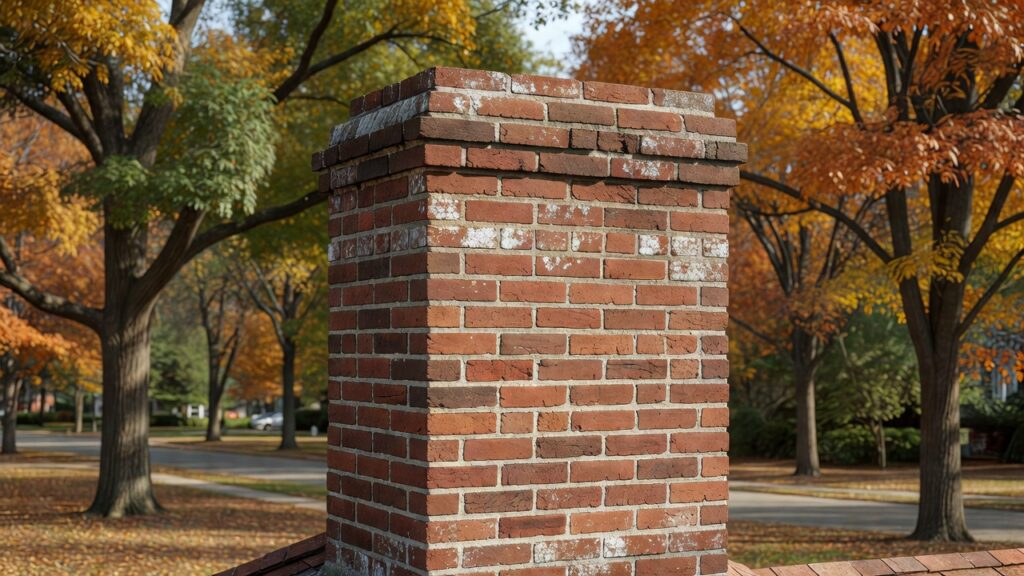
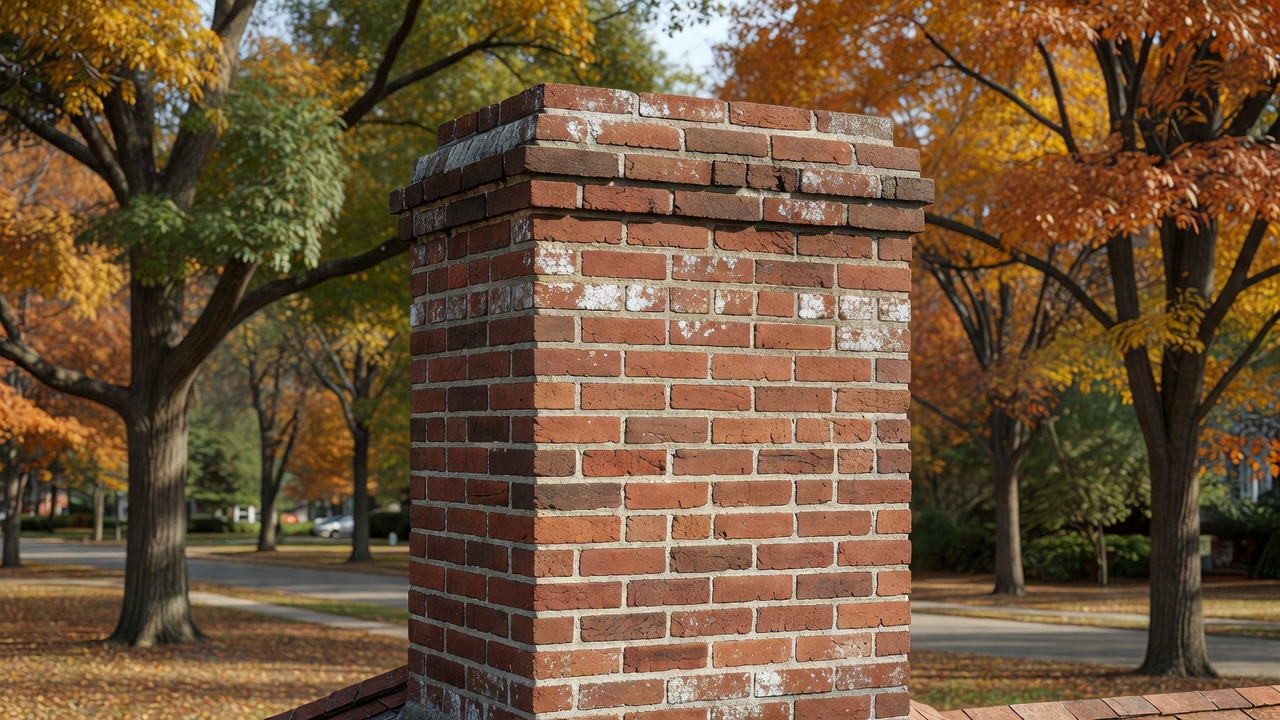
Those chalky white streaks called efflorescence are mineral deposits left behind when water moves through masonry and evaporates. They’re a visible indicator that moisture is already working its way into your chimney structure. On older brick homes common throughout Berkeley Heights and Millburn’s established neighborhoods, this almost always means mortar joints are failing or the crown is cracked. Call a pro now.
A Smoky Smell When the Fireplace Isn’t in Use
This one surprise people because they assume the smell would only happen during a fire. A persistent smoky odor especially in humid weather or on rainy days usually means creosote has built up inside the flue and is off-gassing into the living space. According to the Chimney Safety Institute of America (CSIA), creosote accumulation is the leading cause of chimney fires, and it should be treated as an active hazard, not a nuisance. Call a pro now.
Visible Cracking or Crumbling at the Top of the Chimney
If you can see chunks of mortar on your roof or patio, or the chimney crown looks like it has cracks running through it, that’s not cosmetic damage. The crown is the concrete cap that shields the flue opening from rain and debris. Once it’s compromised, every rainstorm puts water directly into the flue and the surrounding masonry. According to the National Chimney Sweep Guild (NCSG), New Jersey’s freeze-thaw cycles are among the most damaging to masonry in the country and Berkeley Heights and Millburn both see plenty of them. Call a pro now.
Rust Anywhere on the Damper or Firebox
Open the damper and look at the metal components. Rust means sustained moisture exposure which means water is getting in somewhere. A rusted damper also may not seal properly, which wastes energy and lets cold air pour into the house all winter. Call a pro now.
Spalling Brick — Pieces of the Brick Face Breaking Off
Spalling looks like the face of the brick is flaking or popping off. It’s caused by water freezing inside the porous brick and expanding. Left alone, it accelerates. A chimney that loses enough structural integrity can become a falling hazard, and repair costs grow significantly the longer it goes unaddressed. Call a pro now.
Dark Staining Inside the Firebox Above the Smoke Chamber
Some dark coloring is normal. Heavy, oily-looking black residue that extends up into the smoke chamber is a different story that’s third-degree creosote, the hardest form to remove and the most combustible. If you see it, do not use the fireplace again until a certified sweep has evaluated it. Call a pro now.
Loose or Missing Mortar Joints Between Flue Tiles
This one requires a flashlight and some patience, but you can shine a light up from the firebox and sometimes see the joints between flue liner sections. Gaps or crumbling mortar there means combustion gases including carbon monoxide can escape the flue into your home’s framing rather than venting cleanly through the top. The National Fire Protection Association’s Standard 211 recommends annual inspection specifically to catch deterioration like this before it becomes dangerous. Call a pro now.
A Chimney Cap That’s Gone or Visibly Damaged
No cap means an open invitation for rain, squirrels, starlings, and debris. If you look up and see the flue opening is uncovered, or the mesh on the cap is bent and pulled away, you need both an inspection and a new cap. Keep an eye on it but get it scheduled before fall 2026 heating season, not after. Schedule soon.
Choosing the Right Contractor and Spotting the Wrong One
Every October, trucks with magnetic signs and a Groupon deal start showing up in Millburn, Berkeley Heights, Livingston, and Maplewood. Some are legitimate. Many are not. Here’s how to tell the difference before anyone touches your chimney.
Ask about CSIA certification. A Certified Chimney Sweep has passed a nationally recognized exam and is required to stay current with continuing education. It’s the clearest single credential in this trade. If a company can’t produce a CSIA certification number, that’s a red flag.
Ask whether they carry liability insurance and workers’ comp. Chimney work is done on rooftops. An uninsured crew working on your home creates real exposure for you as the homeowner.
Get a written estimate before work starts. Reputable companies will document what they found, what they recommend, and what it costs. If someone gives you a verbal price on the phone without ever inspecting the chimney, that price will change once they’re in your house.
Red flags to watch for: a demand for cash only before any work begins; pressure to approve hundreds of dollars in additional repairs mid-appointment without documentation; no business address you can verify; photos on a phone that may or may not be your chimney. These tactics are real and we hear about them from homeowners across Essex and Union Counties every season.
The U.S. Fire Administration reports that heating fires account for approximately 15% of all residential fires. That’s not a statistic to hand off to whoever shows up first it’s a reason to be selective about who inspects the system keeping your family warm.
Frequently Asked Questions
How often should I schedule a chimney inspection in Millburn NJ or Berkeley Heights?
Once a year, at minimum. The NFPA Standard 211 and the CSIA both recommend annual inspections regardless of how often you use the fireplace. For homes in Berkeley Heights and Millburn where older masonry is common, we’d suggest getting on the schedule before October not after the heating season starts and availability tightens.
What does a chimney inspection actually cover?
A Level 1 inspection the standard annual service covers accessible portions of the exterior and interior of the chimney, the firebox, damper, smoke chamber, and visible flue. A Level 2 inspection, which is required when you’re buying or selling a home or have had a chimney fire or significant event, adds camera scanning of the full flue interior. We explain the difference and recommend the appropriate level before we start any work.
Can I use my fireplace while I’m waiting for the inspection appointment?
It depends on what you’re observing. If you’re seeing any of the high-urgency signs above strong smoky odor, visible cracking in the liner, heavy creosote deposits we’d say hold off until a certified sweep has cleared the system. If things look and smell normal and the signs are minor, light use may be fine, but document what you’re seeing and mention it when you call. We can help you assess over the phone whether it should be an emergency appointment or a standard scheduling.
Schedule Your Millburn Chimney Inspection
Our team serves Berkeley Heights, Millburn, Short Hills, Summit, Chatham, Maplewood, and communities throughout Essex and Union Counties. If you’re seeing any of the warning signs above or you just haven’t had an inspection in the past year, give Short Hills Chimney a call. We’ll give you a straight answer about what we find, document everything in writing, and never pressure you into work your chimney doesn’t actually need. Reach us at shorthillschimney.com to schedule your appointment before the 2026 heating season is in full swing.
Related from Short Hills Chimney: Trusted Chimney Inspection Berkeley Heights NJ · Urgent Chimney Sweep Short Hills NJ